7 Best Fashion Single Jersey Fabric Manufacturers
Fashion Single Jersey Fabric is a popular choice for T-shirts, dresses, and lightweight everyday layers. Its smooth face, soft feel, and natural stretch make it comfortable to wear. Yet fabric performance depends on more than appearance. Fiber content, yarn quality, fabric weight, and finishing can all affect how a garment drapes, washes, and holds its shape.
Choosing a manufacturer takes careful comparison. This guide introduces seven fashion single jersey fabric manufacturers and highlights details buyers can use when assessing potential suppliers. Look beyond a polished swatch: ask about available compositions, weight ranges, color consistency, pilling tests, minimum order quantities, and sample lead times. A supplier’s ability to explain these specifications clearly is useful evidence of practical expertise. Small details count. A fabric that feels excellent on a sample card may behave differently after cutting, sewing, or repeated washing.
No supplier is perfect, and a strong sample cannot guarantee every bulk production run will match. Request current specifications and test fabric under conditions that reflect its intended use. Consider communication, production capacity, and quality-control practices alongside price. These checks can help fashion brands and sourcing teams make a more informed shortlist, whether they need dependable basics or a distinctive jersey for a seasonal collection. The right choice is not always the cheapest—or the most celebrated. It is the manufacturer whose capabilities fit the garment, timeline, and standards you actually need.
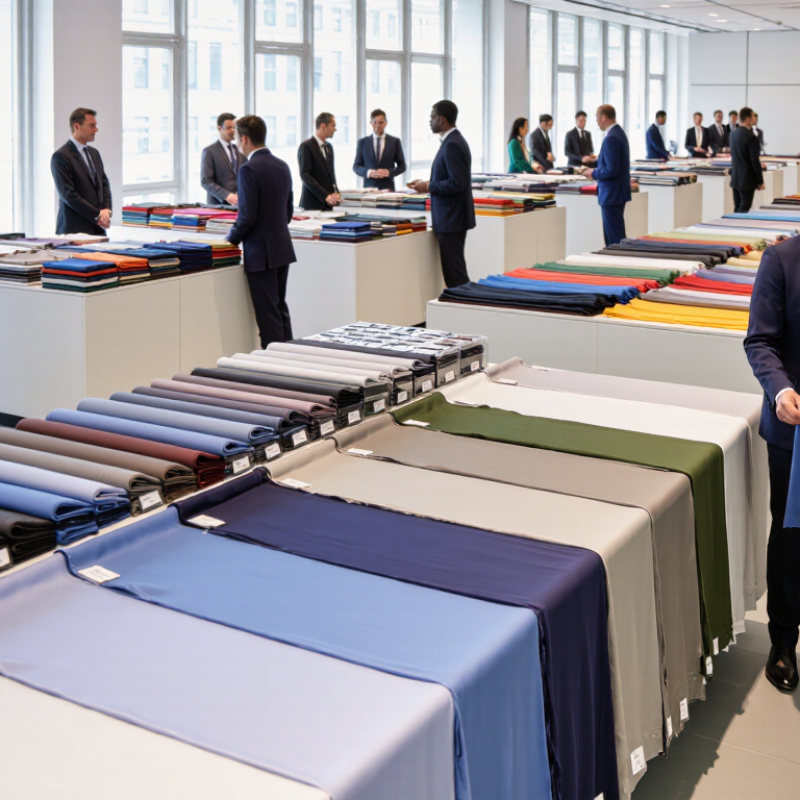
Understanding Single Jersey Fabric and Its Uses in Fashion
Single jersey is a lightweight weft knit made with one set of needles. Its front usually shows smooth V-shaped stitches, while the back has small loops. That contrast gives it a familiar T-shirt feel. It bends easily and often stretches across the width, though fiber content and knitting tension affect recovery. The edges may curl. That matters during cutting and sewing.
Fashion designers use single jersey for T-shirts, casual dresses, leggings, sleepwear, and lightweight layers. Cotton versions feel breathable and soft; blends with elastane can improve stretch and shape retention. A drapey jersey may skim the body, while a heavier one feels more substantial. But the fabric name alone does not guarantee performance. Check its weight, stretch, shrinkage, and opacity before choosing, especially for fitted garments. A pale sample can surprise you under bright light.
Tips: Wash a small swatch before production, then measure it again. Stretch it gently and see whether it recovers. Check both sides, the seams, and the fabric in daylight. If it curls badly or looks sheer, reconsider the pattern or fabric weight. Small tests save trouble.
Typical Single Jersey Fabric Weights by Fiber Blend
Approximate weight ranges commonly used in fashion apparel, measured in grams per square meter (GSM). Actual specifications vary by yarn, knitting structure, and finishing.
Key Criteria for Evaluating Single Jersey Fabric Manufacturers
A reliable single jersey manufacturer should provide more than a soft hand-feel sample. Request the fiber composition, yarn count, fabric weight, and knitting gauge for each proposed quality. Check whether bulk rolls match the approved sample, especially around the edges, where curling and width variation can appear. Small differences matter. Textile Exchange’s Materials Market Report 2024 estimates global fiber production reached 124 million tonnes in 2023, with polyester accounting for 57%. That scale makes clear material traceability worth checking, even when a fabric feels consistent.
Ask how the manufacturer tests dimensional change, pilling, and colorfastness. ISO 6330 describes domestic washing procedures, while ISO 12945 covers fabric pilling assessment. Request test conditions and results, not just a “pass” claim; wash temperature and drying method can affect outcomes. For practical review, wash a cutting from the sample, dry it as instructed, then measure it again. A neat lab sheet helps. It does not replace checking fabric behavior in the intended garment.
Evaluate production controls, too. Ask how knitting faults are recorded, how dye lots are separated, and whether the mill can share traceability documents for yarn and processing. Confirm typical lead times and minimum order quantities in writing. If answers are vague, request a small trial order before committing to bulk production. One limitation: a trial may not expose every issue that appears across a full run, so retain swatches from approved lots for comparison.
Profiles of Seven Leading Fashion Single Jersey Fabric Manufacturers
These seven profiles highlight different strengths in fashion single jersey production.
A circular-knit specialist may offer consistent loop formation and reliable bulk runs. A cotton-focused manufacturer can provide soft, breathable fabric for everyday tops. A modal-blend producer often targets fluid drape and a smooth hand feel. Small details matter.
A performance-knit manufacturer may develop stretch and recovery for fitted garments. A compact-knit specialist focuses on a denser surface and cleaner printing results. A lower-impact producer can share fiber sourcing and processing details, though claims need clear evidence. A flexible factory may accept smaller orders and custom weights, but capacity can be limited.
When comparing manufacturers, request fabric swatches, weight specifications, shrinkage results, and colorfastness data. Check whether samples match production lots; they do not always. Ask how defects are recorded and resolved. These practical checks reveal more than a polished catalogue, and they help match a supplier’s actual capabilities to the garment design.
Comparing Quality, Capabilities, and Sustainability
Choosing a single jersey manufacturer requires more than comparing quoted prices. Ask for the same cotton or cotton-blend specification, then compare fabric weight, width, shrinkage, spirality, and pilling. A 180 GSM swatch can feel smooth but still twist after washing. Request test results under an agreed method, not just a sales sample. Check dye-lot consistency, too. Small shade differences become obvious across a full garment run.
Capacity matters when orders grow. Compare sample lead times, monthly output, knitting gauge options, and the supplier’s ability to repeat a fabric specification.
Textile Exchange’s Materials Market Report 2024 estimates that global fiber production reached 124 million tonnes in 2023, with polyester making up about 57 percent.
That scale makes fiber sourcing worth checking. The report also indicates recycled polyester represented roughly 12 percent of polyester production; this is not proof that a particular jersey fabric contains recycled fiber. Ask for traceable documentation and the exact blend.
Sustainability claims can look tidy on paper. Production records may be less tidy. Compare water and energy data by facility, and ask how figures were measured. A useful comparison leaves room for uncertainty, especially when suppliers report different boundaries.
Choosing the Right Manufacturer for Your Sourcing Needs
Choosing a fashion single jersey fabric manufacturer starts with the garment, not the supplier’s catalog. Define fiber content, fabric weight, usable width, stretch, recovery, hand feel, and intended wash performance. A lightweight T-shirt and a fitted top may need very different constructions. Small details matter.
Request swatches and, when possible, a sample roll. Check the fabric under daylight and indoor lighting, then wash and dry it using the care method planned for production. Record shrinkage, spirality, pilling, and color change; a soft hand alone is not enough. Ask how the manufacturer controls shade variation between lots and which inspection records are available. Ask for proof.
Capacity and communication should match your order size and calendar. Confirm minimum order quantities, sample and bulk lead times, available colors, and how delays are reported. Clear answers help; vague promises do not. Verify quality or environmental documents and check that they cover the actual factory and fabric. A polished sample can still hide production limits. Leave room for another review: early specifications are rarely perfect, and a small mismatch in width or recovery can affect fabric yield and garment fit.
7 Best Fashion Single Jersey Fabric Manufacturers - Choosing the Right Manufacturer for Your Sourcing Needs
Supplier evaluation framework: compare documented capabilities and fabric test evidence rather than unsupported supplier-specific claims.
| Sourcing Dimension |
Useful Industry Reference |
What to Request from a Manufacturer |
| 1. Fiber Composition |
Single jersey is commonly produced in 100% cotton and in blends such as cotton/polyester. Other apparel options include viscose or modal blends; the appropriate fiber depends on the intended garment and performance requirements. |
Request the exact fiber percentages, a fabric specification sheet, and a composition test report for the proposed production fabric. |
| 2. Fabric Weight (GSM) |
Approximately 120–220 g/m² is a commonly encountered range for apparel single jersey, though lightweight and heavyweight constructions can fall outside it. GSM alone does not define hand feel or durability. |
Confirm the target GSM and allowed tolerance in writing. Ask for a sample measured using an agreed method, such as ISO 3801, where applicable. |
| 3. Usable Fabric Width |
Finished width varies with machine, construction, finishing, and supplier setup; there is no universal width for single jersey. |
Specify usable width after finishing, whether the fabric is tubular or open-width, and how width will be measured and checked during production. |
| 4. Construction and Knitting Quality |
Single jersey is a weft-knit structure. Appearance and performance depend on yarn, stitch length, machine settings, and finishing, so construction should be assessed against the approved sample. |
Request a swatch and a written construction specification. Check for holes, needle lines, barre, uneven stitches, and other defects using agreed inspection criteria. |
| 5. Dimensional Stability |
Knitted fabric can change dimensions during laundering. ISO 6330 specifies domestic washing and drying procedures for textile testing; it does not set a universal shrinkage limit. |
Agree on the wash and drying procedure, test method, and maximum permitted shrinkage before bulk production. Request results for the actual fabric and finish. |
| 6. Colorfastness and Pilling |
ISO 105-C06 provides methods for colorfastness to domestic and commercial laundering. ISO 12945-2 provides a method for assessing fabric pilling by the modified Martindale method. Acceptance grades depend on the buyer’s specification. |
Set required grades and test conditions in advance. Request laboratory reports identifying the tested color, fabric lot, method, and result. |
| 7. Certification and Traceability |
Standards address different claims: OEKO-TEX STANDARD 100 tests textile products for harmful substances; GOTS covers organic textiles and related processing requirements; GRS concerns recycled content and chain of custody. |
Verify certificate validity, scope, product coverage, and transaction documentation where relevant. Do not treat one certification as proof of claims covered by another. |
Note: The figures and standards above are general sourcing references, not guarantees for any particular supplier or fabric. Confirm the final specification, test methods, tolerances, and acceptance criteria with the manufacturer before placing an order.