Best Knitting Fabric Types for Your Next Project?
The world of knitting fabric is vast and diverse, bringing endless possibilities to your crafting endeavors. According to a recent report by the Textile Association, the global demand for knitting fabrics is expected to grow by 5% annually. This trend highlights a significant shift in consumer preferences towards sustainable and innovative fabric options. “Choosing the right knitting fabric can make or break your project,” says knitting expert Emma Ruiz, underlining the importance of fabric selection.
Knitting fabrics range from classic options like cotton and wool to modern blends that offer unique characteristics. Understanding these varieties is crucial for both novice and experienced knitters. For example, softer fibers often provide more comfort but may require special care. Fabric elasticity can also affect the final product's durability and fit.
Ultimately, the best knitting fabric for your project depends on your specific needs and preferences. It's essential to reflect on your choices. Not every fabric will perform as expected. Take the time to explore and experiment with different options. The journey through the realm of knitting fabric can lead to rewarding outcomes.
Overview of Popular Knitting Fabric Types
When choosing fabric for your next knitting project, many options exist. Understanding these types will enhance your craft. Wool is popular for its warmth and elasticity. Merino wool offers softness, while alpaca adds a luxurious touch. Cotton is lightweight and breathable, perfect for warmer seasons. Linen, too, has a crisp feel, ideal for summer garments.
Choosing the right fabric can be tricky. Consider the project's purpose first. Some fabrics may stretch. Others may not hold their shape well. If you aim for a structured item, avoid overly stretchy options.
Tips: Always knit a swatch. It will help you see how the yarn behaves. Test fabrics in a small project. You may find some unsuitable for your design. Finally, don’t be afraid to mix fabrics. Combining textures can add depth to your work. Trust your instincts, and enjoy the process!
Understanding Fiber Content and Its Impact on Knitting
When it comes to knitting, fiber content is crucial. Different fibers behave uniquely. Wool, for instance, has excellent elasticity and warmth. Cotton, on the other hand, is breathable and soft but lacks stretch. Synthetic fibers can add durability and are often easier to care for. Understanding these differences helps in selecting the right yarn for your project.
Tips: Always check the fiber label. It will provide insights into how the yarn will perform. For beginners, try blending fibers. This can balance the best qualities of each. Mixing wool with cotton, for example, can give you stretch and breathability.
Don’t hesitate to experiment. Sometimes a yarn that seems perfect might not behave as you expected. If your knitted fabric ends up too stiff or loose, reflect on the fiber choices. Adjustments can always be made in future projects. Knitting is about learning and evolution, so embrace the process.
Comparing Natural vs. Synthetic Yarn for Your Projects
When choosing yarn for your next project, understanding the difference between
natural and
synthetic fibers is essential.
Natural fibers, like cotton and wool, are popular. They are
breathable and
biodegradable, making them environmentally friendly.
According to a recent report by the Craft Yarn Council, around
55% of knitters prefer natural yarns for their
softness and comfort. Wool retains warmth even when wet,
which is a significant advantage in colder climates.
On the other hand, synthetic fibers, such as acrylic or nylon, offer distinct benefits.
They are often more affordable and come in a wider variety of colors and textures.
A study conducted by the Textile Research Journal highlights that synthetic yarns contribute
to
45% of the market, primarily due to their
durability and ease of care. However, some knitters find them less breathable.
This could lead to discomfort in warmer weather.
As you weigh your options, consider the unique qualities of each type of yarn.
Natural fibers might make a beautiful scarf but could require more care.
Synthetic options are easy to wash but might lack the charm of handmade warmth.
Reflect on what matters most for your project:
comfort,
care, or
cost.
Choosing the Right Weight: Fingering to Bulky Yarn Explained
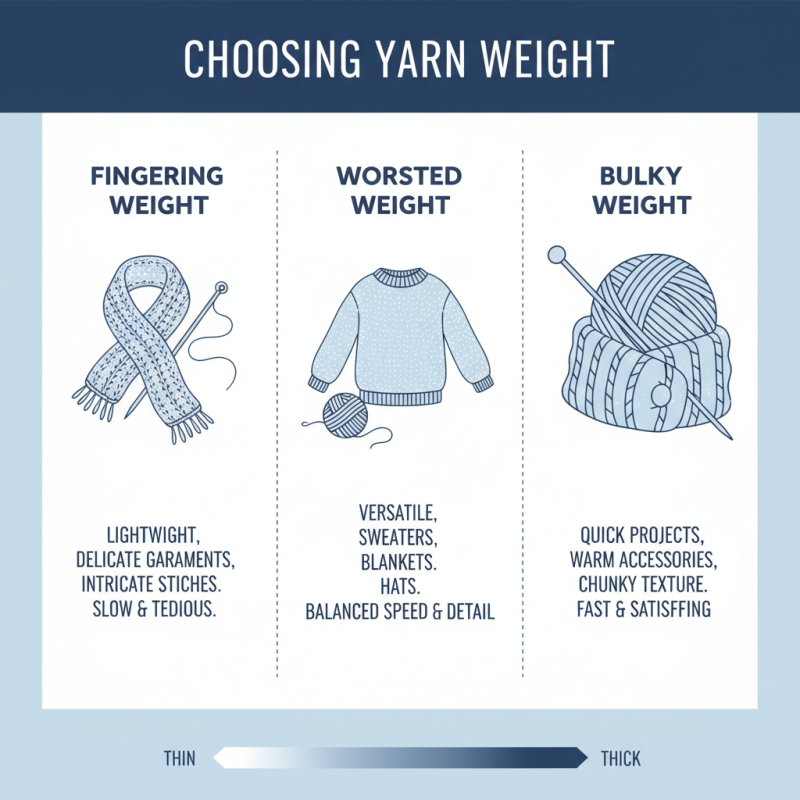
When starting a knitting project, choosing the right yarn weight is crucial. Yarn comes in various weights, ranging from fingering to bulky. Each weight serves a unique purpose and has its own appeal for different types of projects. For example, fingering weight yarn is lightweight and often used for delicate garments. It allows for intricate stitch patterns, but the process can be slow and tedious. Some knitters may find this frustrating.
On the other hand, bulky yarn offers a faster knitting experience. Projects using bulky yarn typically grow quickly. This weight is ideal for cozy blankets or warm sweaters. According to a recent industry report, nearly 40% of knitters prefer bulky yarn for quick projects. However, thicker yarn can limit stitch definition, which may not suit every project. Finding the balance between speed and detail can be challenging.
Many knitters also express mixed feelings about yarn weight choices. Some enjoy exploring all weights, while others feel more comfortable sticking to one or two. This reflects the diversity in knitting preferences and skills. Experimenting with different yarn types can lead to surprising and rewarding results. Yet, it can also be overwhelming, especially for beginners. Understanding the implications of yarn weight is essential for enhancing your knitting experience.
Tips for Selecting the Best Fabric for Different Knitting Techniques
Choosing the right fabric for knitting can be daunting. Different fabrics offer unique textures and drapes. For beginners,
soft acrylic yarns are easy to work with. They are affordable and come in various colors. Industry reports indicate that
over 60% of new knitters favor acrylic for its versatility.
Cotton yarn is another excellent option. It’s breathable and ideal for warmer weather. However, it might stretch too much if not handled properly. According to market studies,
40% of experienced knitters choose cotton for its crispness and durability. This choice often leads to thoughtful experimentation with blending fibers.
Wool has its charm too. It retains warmth and comes in various weights. However, some knitters find it itchy. This can affect comfort. The key is to test samples before committing.
Many experts suggest swatching before starting large projects. Small mistakes like mismatched fibers can lead to bigger problems later.
Consider how each fabric behaves under tension. Selecting the right material enhances both the process and the final piece.