How to Choose the Best Knitted Apparel Fabric for Your Needs?
Choosing the right knitted apparel fabric is crucial for any clothing project. Knitted Apparel Fabric comes in various types, each with unique qualities. Understanding the characteristics of these fabrics can make all the difference.
When selecting a fabric, consider the intended use. Will it be for casual wear or activewear? The fabric's stretch and durability are essential factors. Sometimes, you might find a beautiful fabric that lacks performance. This is a common dilemma for many.
Additionally, the feel of the fabric against your skin matters. It's not just about appearance; comfort plays a vital role too. Ensure the knitted apparel fabric aligns with your lifestyle and preferences. Reflect on your choices. The best fabric enhances your clothing experience, making it not just wearable but enjoyable.
Understanding Different Types of Knitted Fabrics and Their Uses
When selecting knitted fabric, understanding its types and applications is crucial. Knitted fabrics can be broadly categorized into weft and warp knits. Weft knits are versatile and suitable for casual wear. They stretch well and provide comfort. In contrast, warp knits are stronger and often used in activewear. According to a report by Grand View Research, the global knitted fabric market is expected to reach USD 53.8 billion by 2025, showcasing its increasing demand.
Cotton and wool are popular choices. Cotton is breathable and ideal for warmer climates. Wool, however, offers insulation and moisture-wicking properties, making it suitable for colder weather. A study by Textile World revealed that around 30% of consumers prioritize comfort when choosing knitted apparel. This demonstrates the importance of selecting the right fabric based on personal needs.
Other fabrics, like polyester blends, offer durability and are moisture-resistant. While they may lack breathability, they are excellent for outdoor activities. Reflecting on one's specific use-case is vital. For example, a fabric that works for yoga may not suit winter sports. Understanding these details can help tailor choices to individual preferences effectively.
Evaluating Fabric Texture and Stretch for Comfort and Fit
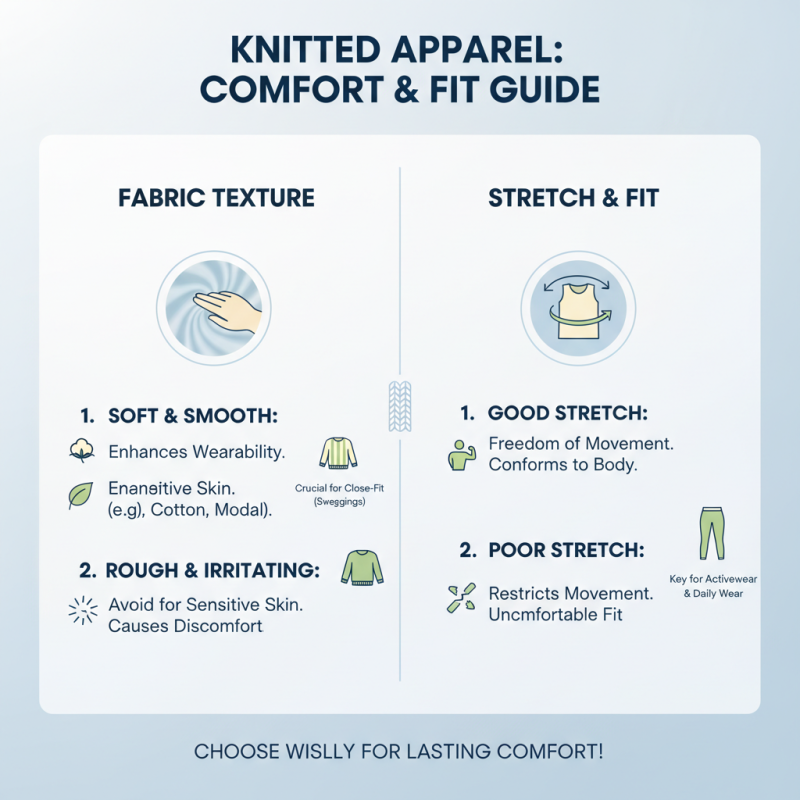
When selecting knitted apparel, fabric texture and stretch are essential factors for comfort and fit. A soft, smooth texture enhances wearability and enjoyment. Fabrics like cotton or modal often provide a pleasant feel against the skin. However, some textures can irritate sensitive skin. This factor is crucial, especially for close-fitting garments such as sweaters or leggings. Choose wisely to prevent discomfort during wear.
Stretch is another critical element. Fabrics with good elasticity maintain their shape while allowing ease of movement. Look for blends that include spandex or elastane for improved stretch. But, be cautious. High-stretch fabrics may lose their shape over time. Always check for the balance between stretchability and retention. This balance will ensure your apparel remains flattering without sacrificing comfort.
Remember to test fabrics personally. A swatch can help assess texture and stretch. Sometimes, what looks great in a store may not perform well in daily life. Prioritize your personal comfort and fit above aesthetics. Each choice should reflect your lifestyle and personal preferences.
Considering Weight and Thickness for Seasonal Appropriateness
When selecting knitted apparel, weight and thickness are crucial for seasonal wear. Lighter fabrics work well for spring and summer. These weights often feature breathable fibers. They allow air circulation, keeping you cool. For example, consider cotton or lightweight blends. They provide comfort without being suffocating on hot days.
As temperatures drop, thicker fabrics become essential. Wool and acrylic yarns add warmth during colder months. These materials offer insulation while still being stylish. However, not everyone finds wool comfortable against their skin. It can sometimes be scratchy. Choosing the right fiber is key to avoiding discomfort.
Evaluate your climate and personal needs. The perfect fabric should feel good and suit the season. Aim for versatility in your wardrobe. Experiment with different weights and thicknesses to discover what works best for you. Not all fabrics will meet your expectations. It may take a few tries before finding the ideal knitted material for every occasion.
Examining Care Instructions and Durability for Long-Term Use
When selecting knitted apparel, care instructions play a crucial role in ensuring the longevity of your fabric. Fabrics like cotton, wool, or acrylic have distinct care needs. For instance, wool often requires gentle hand washing to maintain shape and softness. Cotton is durable and can withstand machine washing, but it may shrink if dried improperly. Understanding these nuances helps you make informed choices.
Durability is equally important. Knits can wear differently based on their fiber content and knit structure. A loose knit might snag easily, while tighter weaves often endure more stress. If you're investing in high-quality apparel, examine the fabric's stretch and resistance to pilling. Remember, not every knit fabric will last long under frequent use. Reflecting on your lifestyle can guide your choices. Do you need strong durability for everyday wear, or is comfort your priority? Each decision impacts your satisfaction with the final product.
How to Choose the Best Knitted Apparel Fabric for Your Needs?
| Fabric Type |
Care Instructions |
Durability |
Best Use |
| Cotton Knit |
Machine wash cold, tumble dry low |
Medium |
Casual wear, children's clothing |
| Wool Knit |
Hand wash or dry clean only |
High |
Cold weather apparel, sweaters |
| Polyester Knit |
Machine wash warm, tumble dry medium |
High |
Activewear, stretch clothing |
| Bamboo Knit |
Machine wash cold, hang dry |
Medium |
Eco-friendly apparel, casual wear |
| Acetate Knit |
Hand wash cold, do not wring |
Low |
Fashion wear, special occasions |
Assessing Eco-Friendliness and Sustainability of Fabric Choices
When selecting knitted apparel fabric, eco-friendliness and sustainability are crucial factors. Fabrics made from organic fibers minimize environmental impact. They often use less water and fewer pesticides. Consider fabrics like organic cotton, which has a softer feel and is better for the planet. Recycled materials are also a wise choice. They help reduce waste and give a second life to discarded textiles.
Many synthetic fabrics, while affordable, may lack sustainability. They can contribute to microplastic pollution. This reality raises questions about our fabric choices. We must weigh convenience against ecological impact. Look for certifications that indicate eco-friendliness. These symbols can guide you in making informed decisions. Remember, every choice matters in the fabric supply chain. Each step influences sustainability in the industry.
Opting for sustainable fabrics can require extra effort. You may have to research suppliers or compare options. It might not be as simple as picking up any fabric. This process can feel overwhelming, but it’s essential. Reflect on your choices and their long-term implications. Sustainable fashion starts with informed decisions about every piece of fabric we use. Challenges in sourcing eco-friendly options should not deter your quest for a better future.
Eco-Friendliness and Sustainability of Knitted Apparel Fabrics