How to Choose the Best Single Jersey Fabric for Your Project?
Single Jersey fabric has become a popular choice for various textile projects. Renowned fabric expert, Dr. Emily Chen, emphasizes its versatility by stating, "Single Jersey is the backbone of comfortable apparel." This statement captures the essence of why this fabric is favored by designers and manufacturers alike.
When selecting the best Single Jersey for specific needs, several factors come into play. The weight and texture are crucial. A lightweight Single Jersey, for instance, can create breathable garments. It provides comfort for casual wear. Heavier options, conversely, offer durability and structure. Designers must consider the end-use of the fabric carefully. Mistakes can lead to dissatisfaction with the final product.
Choosing the right Single Jersey can be challenging. It's easy to overlook details like color, stretch, and drape. These elements significantly impact the garment's overall quality and appearance. A thoughtful approach is necessary. Each project demands a tailored selection process. Taking shortcuts may yield results that don't meet expectations. This delicate balance is essential for achieving success in textile design.
Understanding Single Jersey Fabric: Characteristics and Benefits
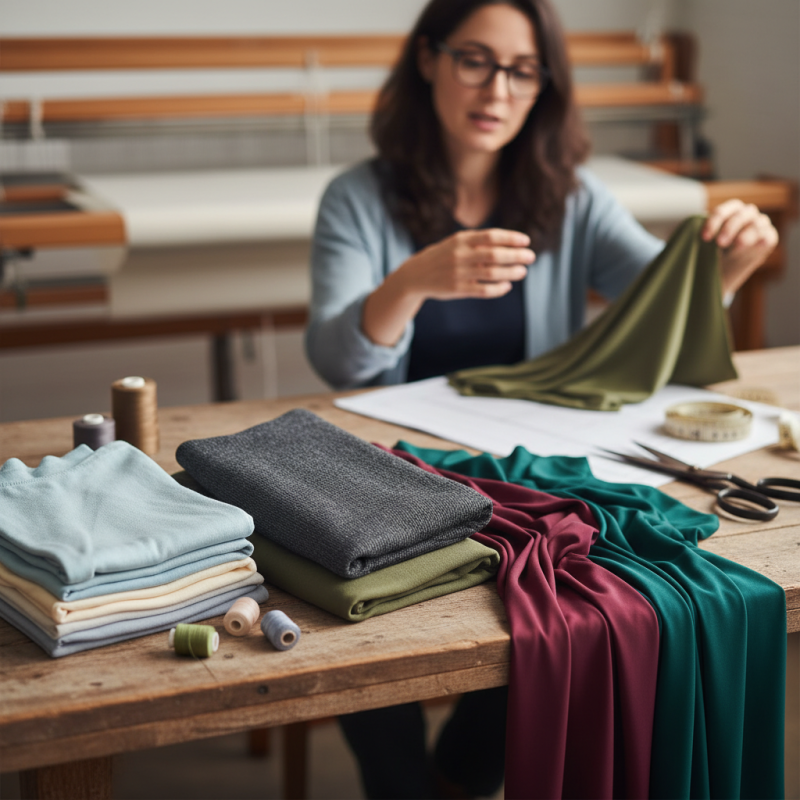
Single jersey fabric is a popular choice in the textile world. This fabric is made from a single row of loops. It provides a smooth surface, making it ideal for t-shirts and casual wear. The lightweight nature of single jersey helps maintain comfort, especially in warm weather. However, it may not always offer the durability needed for heavy use.
The stretchability of single jersey is another appealing quality. This fabric can easily move with the body, allowing for freedom of movement. While it offers great comfort, some users may find it less supportive than other fabrics. It can sag or lose shape over time, especially if not cared for properly. Understanding how to wash and maintain single jersey can help prolong its life.
It is important to consider the weight of the fabric. Heavier weights can provide more structure but may also retain more heat. Lighter weights are breathable but may require more careful handling. Choosing the right weight depends on the intended use. Reflecting on these aspects can lead to better material choices for any project.
How to Choose the Best Single Jersey Fabric for Your Project?
This bar chart illustrates the key characteristics of single jersey fabric, highlighting attributes such as breathability, durability, softness, weight, and stretchability. Understanding these factors can assist in making an informed choice for your fabric-related projects.
Identifying the Right Weight and Composition for Your Needs
Choosing the right weight and composition for single jersey fabric is crucial for your project. The fabric’s weight affects how it drapes and how comfortable it feels. Lighter fabrics work well for warm weather. A heavier weight offers more structure, perfect for cool climates.
Consider the fabric composition. Cotton is soft and breathable but may wrinkle easily. Blends like cotton-polyester provide durability and wrinkle resistance. This might be a better choice for everyday clothing. Sometimes, the feel of the fabric can differ greatly, even in similar weights. Don’t rush this decision.
Tips: Always check fabric samples before buying. Touch and feel are important. Test how the fabric reacts to washing. Does it hold its shape? This step can save you from costly mistakes.
When reflecting on your project, identify the purpose. Will this garment be worn frequently? Think about durability accordingly. This can help guide your choice of fabric weight and composition effectively. Making the right choice can enhance your project significantly.
Evaluating the Fabric Texture and Stretch for Comfort
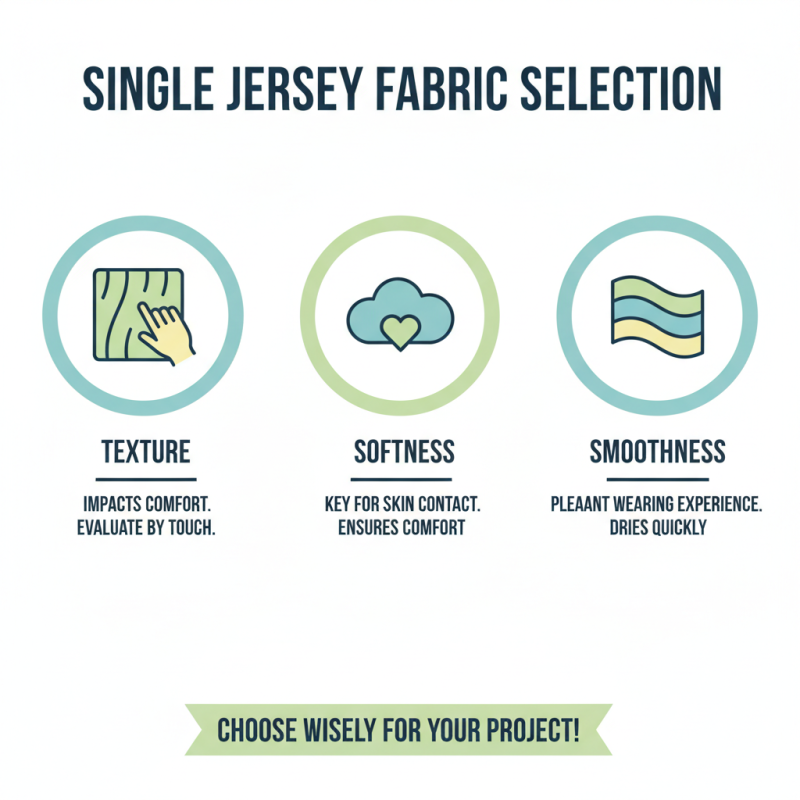
Choosing the right single jersey fabric is crucial for your project. Fabric texture greatly impacts comfort. When evaluating, touch and feel the material. Softness is key for clothing worn close to the skin. A smooth surface often translates to a more pleasant wearing experience.
Stretch is another vital factor. Fabrics with good stretch provide ease of movement. You don’t want your clothes to feel restrictive. Look for fabrics that recover well after being stretched. For added comfort, consider the weight of the fabric too. Lightweight jerseys work well for summer wear, while heavier options are better for cooler weather.
Be mindful of what you want. Sometimes, it’s easy to overlook finer details. For instance, a fabric might feel perfect at first but doesn’t breathe well. Always test before committing to a large purchase. Remember, comfort should not be an afterthought in your design process.
Color and Print Considerations for Your Project's Design
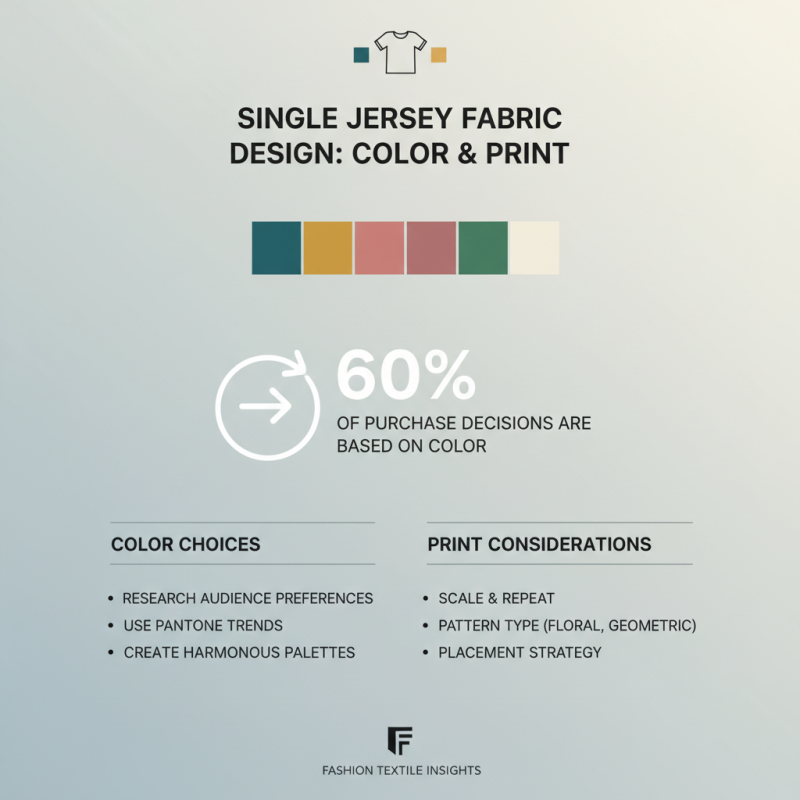
When designing with single jersey fabric, color and print choices are crucial. A well-researched color palette can enhance your project's appeal. According to the Pantone Color Institute, 60% of people make purchasing decisions based on color alone. This statistic emphasizes the importance of selecting colors that resonate with your audience.
Consider the mood you wish to convey. Soft pastels may evoke calmness, while vibrant colors can energize. Prints, too, add character. A study by the International Textile Manufacturers Federation shows that printed fabrics account for 30% of the global fabric market. Yet, the wrong print can dilute your message. For example, busy patterns can sometimes overwhelm. Striking a balance is key.
Testing color options is vital. A cheap miscalculation can lead to unsatisfactory outcomes. Try swatches in natural light to see how they change. Remember, the print lifecycle is dynamic. Trends fluctuate, and what is appealing today may not be tomorrow. Keep an eye on emerging styles. This way, your project remains relevant.
Sustainability and Care: Choosing Eco-Friendly Single Jersey Options
In today’s fashion industry, sustainability is becoming an essential consideration. Single jersey fabric, often chosen for its soft texture and versatility, can be produced in eco-friendly ways. Organic cotton is one such material. According to the Global Organic Textile Standard (GOTS), organic cotton farming uses 91% less water than conventional methods. This statistic is crucial for brands seeking greener options.
Choosing eco-friendly single jersey is more than just about the fiber. Consider how the fabric is dyed and finished. Conventional dyeing processes can involve harmful chemicals. A report from the Environmental Protection Agency states that textile dyeing is responsible for 20% of the world’s industrial water pollution. Opting for fabrics dyed with natural or low-impact dyes can make a positive difference.
Not all eco-friendly options are without flaws. Some renewable materials still require significant resources for production. For instance, Tencel, made from sustainably harvested wood, needs a large amount of water and energy. Industry leaders are working to improve these metrics, but the journey is ongoing. It’s essential to weigh the benefits against the environmental costs when choosing single jersey fabrics.
How to Choose the Best Single Jersey Fabric for Your Project? - Sustainability and Care: Choosing Eco-Friendly Single Jersey Options
| Fabric Type |
Sustainability Score |
Comfort Level |
Care Instructions |
Typical Uses |
| Organic Cotton Jersey |
9/10 |
High |
Machine wash cold, tumble dry low |
T-shirts, dresses, casual wear |
| Recycled Polyester Jersey |
8/10 |
Medium |
Machine wash warm, lay flat to dry |
Athletic wear, active lifestyle clothing |
| Bamboo Jersey |
9/10 |
Very High |
Machine wash cold, iron low heat |
Shirts, loungewear, baby clothing |
| Tencel Jersey |
7/10 |
High |
Machine wash cold, do not bleach |
Blouses, dresses, eco-friendly fashion |
| Hemp Jersey |
8/10 |
Medium to High |
Machine wash cold, hang dry |
Casual wear, eco-conscious clothing |