How to Choose the Best Viscose Knitted Fabric for Your Projects?
Choosing the best Viscose Knitted Fabric for your projects can be a daunting task. The market for knitted fabrics has been growing steadily, with a projected increase of 4% annually. Viscose, known for its softness and drapability, plays a significant role in this growth. Industry expert Dr. Emma Carter states, "Selecting the right fabric is crucial in ensuring the quality of your design." This highlights the importance of fabric choice in the fashion and textile industries.
Viscose Knitted Fabric is prized for its versatility, making it suitable for various applications, from casual wear to elegant dresses. However, not all viscose fabrics are created equal. Factors such as fiber quality and knit structure significantly influence their performance. Many designers overlook these details, sometimes opting for aesthetics over functionality, which can lead to disappointing results.
Understanding the unique properties of Viscose Knitted Fabric is essential for successful project outcomes. It can be tricky to balance between cost and quality. As with any fabric, failing to consider the end use can diminish the overall impact of your work. Take the time to analyze your options, consult with experts, and remember that fabric choice impacts both feel and fit in the final product.
Understanding Viscose Knitted Fabric: Properties and Benefits
Viscose knitted fabric is gaining attention for its unique properties and benefits. Made from regenerated cellulose fibers, it offers a soft and breathable alternative to traditional materials. According to industry reports, approximately 30% of all knitted fabrics use viscose blends. This highlights its popularity and versatility in various projects.
One of the standout characteristics of viscose is its excellent moisture absorption. It can absorb up to 50% more moisture than cotton. This makes it suitable for clothing that needs to keep the wearer comfortable. However, it tends to wrinkle easily. Keep this in mind when choosing for specific uses. Durability can vary, as well. While it's resilient, proper care is essential to maintain its quality.
Viscose also drapes beautifully, making it ideal for flowing garments. The fabric's sheen adds an elegant touch to any design. Despite its positives, it's worth noting that it may require more maintenance compared to synthetic fabrics. This is something many designers overlook. Balancing its benefits against the care requirements can be challenging. Thus, understanding these nuances is crucial for making informed choices in your fabric selection.
Assessing Fabric Weight: Choosing the Right GSM for Your Project
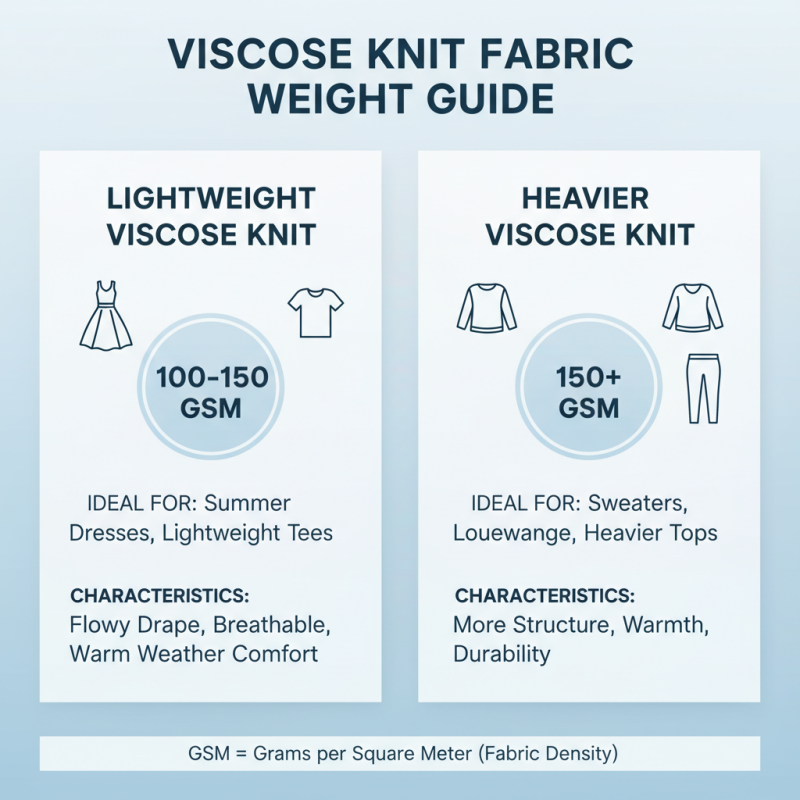
When selecting viscose knitted fabric, fabric weight is crucial. GSM, or grams per square meter, indicates how heavy a fabric is. A lighter fabric typically has a GSM of around 100-150. This weight works well for flowy garments like summer dresses or lightweight tees. These fabrics drape beautifully and are breathable, making them ideal for warm weather.
On the other hand, a moderate GSM of 200-250 offers more structure. This weight is perfect for casual wear, such as sweaters or cardigans. Such fabrics can provide warmth without being too bulky. However, choosing the wrong GSM might lead to disappointment in your project. If you opt for too heavy a fabric, it may feel stiff. Conversely, too light a fabric could lack the necessary support.
Experimenting with different GSMs can help refine your understanding. Consider your intended use and the comfort of the final garment. Don’t hesitate to touch and feel samples before making a decision. This tactile experience informs your choice better than numbers alone. Remember, finding the right balance in weight can significantly elevate your project’s overall quality.
Evaluating Stretch and Recovery: Key Factors in Viscose Performance
When choosing viscose knitted fabric, stretch and recovery are crucial. Stretch refers to how much the fabric can expand when pulled. Recovery is how well it returns to its original shape. High-quality viscose should stretch well but not lose its shape easily. You want fabric that feels comfortable but also holds its form after several wears.
Look for samples of viscose fabrics. Test their stretch by pulling gently on a swatch. Notice how it bounces back. Some fabrics may stretch too much. Others might feel stiff or limit movement. Visualize how the fabric will behave in your project. Will it sag? Or will it maintain structure? These details matter in the long run.
Sometimes, shadows appear in choices. Fabrics that seem perfect might disappoint. Consider the weight and drape, as they also impact performance. Not all viscose performs the same. Experimenting and reflecting on your needs can lead you to the right choice. Look closely, and you may find hidden gems.
Evaluating Stretch and Recovery of Viscose Knitted Fabrics
Identifying Quality: Recognizing Standards in Viscose Fabrics
When selecting viscose fabric, quality matters greatly. The first step is to examine the fabric's texture. A high-quality viscose should feel smooth and soft against your skin. If the fabric is rough or scratchy, it's likely not the best choice. Look for even fibers without irregularities. Uneven surfaces can indicate poor production standards.
Next, check the fabric's drape. Quality viscose should flow beautifully when hung. Hold it up and see how it falls. If it twists or crumples awkwardly, consider finding an alternative. The color should also be consistent throughout. Faded patches can signal inferior dyeing processes.
It’s essential to reflect on how the fabric will wear over time. Will it hold up to washing? Quality viscose typically has good durability. However, some lower grades can fade or lose shape quickly. Ask yourself if the fabric meets your standards for longevity. A little research can go a long way in avoiding costly mistakes.
Sustainability Considerations: The Eco Impact of Viscose Production
Viscose production has both benefits and drawbacks for the environment. On one hand, it is derived from natural sources like wood pulp. This brings a renewable aspect to the fabric. However, the process of turning wood into viscose often involves harmful chemicals. These chemicals can pollute water and soil, raising concerns about sustainability.
When choosing viscose knitted fabric, consider the sourcing of materials. Look for suppliers who prioritize eco-friendly methods. Certification like FSC (Forest Stewardship Council) ensures responsible forestry practices. Smaller production batches can also lead to less waste. Aim to buy fabric that uses non-toxic dyes and chemical-free processing methods.
Tips: Always ask about the production methods when purchasing fabric. Check if the company has a sustainability policy. Think about how much fabric you truly need to minimize waste. Using remnants can contribute to a more sustainable practice. Reflect on your choices and their impact on the planet. Every small step counts in building a greener future.
How to Choose the Best Viscose Knitted Fabric for Your Projects? - Sustainability Considerations: The Eco Impact of Viscose Production
| Aspect |
Description |
Sustainability Rating |
Environmental Impact |
| Source |
Plant-based cellulose, typically from bamboo or wood pulp. |
3/5 |
Dependent on deforestation rates and sustainable harvesting practices. |
| Production Process |
Chemical processing of cellulose to create fibers. |
2/5 |
High resource consumption and potential pollution from chemicals. |
| Biodegradability |
Viscose can biodegrade under the right conditions. |
4/5 |
More eco-friendly compared to synthetic fibers. |
| Water Usage |
High water consumption during cultivation and production. |
2/5 |
Heavy impact on local water resources. |
| Carbon Footprint |
Moderate carbon emissions throughout production. |
3/5 |
Mitigated with sustainable practices. |