How to Choose the Best Knit Fabric for Your Next Project?
Choosing the right knit fabric for your next project can be challenging. The vast array of options can be overwhelming. Different knit fabrics serve different purposes. Each type has unique properties that may affect your crafting experience.
Knit fabric is versatile. It is perfect for garments, accessories, and home decor. However, not all knit fabrics are created equal. Some offer excellent stretch, while others provide structure. Consider the weight and drape of the fabric. A heavier knit may work best for projects needing support.
Reflecting on your project goals is essential. Are you aiming for comfort, style, or durability? The right knit fabric can elevate your creation. Don’t shy away from experimenting with different materials. Each choice can lead to new discoveries and sometimes, unexpected challenges.
Understanding Different Types of Knit Fabrics for Your Project
When selecting knit fabrics, understanding the types is crucial for your project. There are various knit fabrics available, including jersey, interlock, and rib knit. Each type has unique qualities and uses. For instance, jersey is lightweight and stretchy, making it ideal for t-shirts and dresses. Interlock is thicker, providing more warmth and structure, suitable for casual wear. Rib knit offers a textured look and is often used in cuffs and hems.
Recent industry reports show that knit fabrics are becoming increasingly popular, accounting for over 40% of the apparel market. This trend highlights the demand for comfortable and versatile clothing. Many people overlook fabric weight and stretchability. This may lead to unsatisfactory results, especially in clothing that should fit well. It’s essential to test different knits before committing to a project.
Another area for reflection is sustainability. Many knit fabrics are made from synthetic fibers, which can have negative environmental impacts. Opting for organic cotton or recycled materials is a choice worth considering. As you navigate your options, remember that the best fabric doesn’t only depend on aesthetics but also on the broader implications of your choices.
How to Choose the Best Knit Fabric for Your Next Project?
| Fabric Type |
Characteristics |
Best Uses |
Care Instructions |
| Jersey Knit |
Soft, stretchy, and lightweight |
T-shirts, dresses, and leggings |
Machine wash cold, tumble dry low |
| Interlock Knit |
Thicker, more stable, with a smooth surface |
Bags, shirts, and casual wear |
Machine wash warm, iron on low |
| Rib Knit |
Elasticity and texture from raised ribs |
Cuffs, collars, and fitted garments |
Machine wash cold, lay flat to dry |
| Sweater Knit |
Warm, cozy, and often thicker |
Sweaters, cardigans, and accessories |
Hand wash or dry clean recommended |
| Athletic Knit |
Moisture-wicking and breathable |
Activewear, sports jerseys, and leggings |
Machine wash cold, do not iron |
Evaluating Fabric Weight and Stretch for Optimal Performance
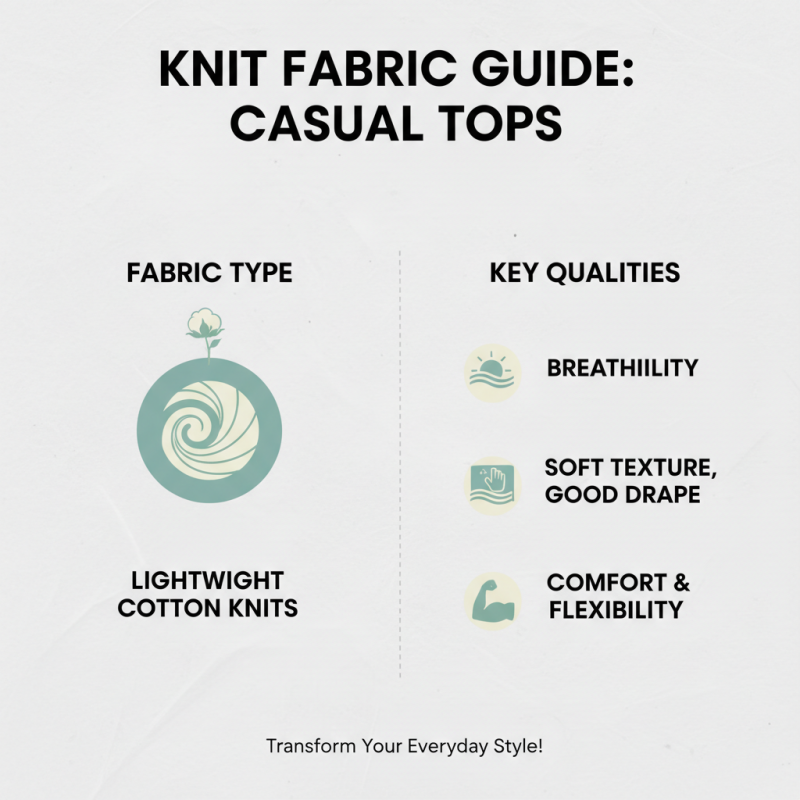
When selecting knit fabric for your next project, evaluating fabric weight is crucial. Lighter fabrics have a soft, flowing quality. They work well for summer garments, like tops and dresses. However, they can lack structure, making them less ideal for fitted designs. Heavier knits provide better durability and support. They can hold their shape and are often used for sweaters or structured garments. Finding a balance is essential, as too heavy a fabric can feel restrictive.
Stretch is another significant factor to consider. Stretchy fabrics give comfort and ease of movement. They fit the body nicely and are great for making activewear or fitted styles. On the other hand, some fabrics may stretch out too much over time, losing their shape. It’s important to consider how much stretch you need. The right amount can enhance your design, while too little can leave your garment feeling stiff. Experimenting with swatches can help you visualize the final product. Don't hesitate to mix weights and stretches to find the perfect combination for your vision.
Considering Fiber Content: Natural vs. Synthetic Knit Fabrics
When choosing knit fabrics, fiber content plays a crucial role.
Natural fibers like cotton and wool are breathable and soft.
They absorb moisture, which makes them perfect for casual wear. However, they often require more care.
They can shrink or stretch over time. That’s something to consider before making a decision.
Synthetic fibers, like polyester and nylon, offer durability and are often less expensive.
They can stretch without losing shape, making them great for activewear. However, they may trap heat and moisture,
leading to discomfort in hot weather. This is a trade-off that depends on the intended use of the fabric.
Tips for choosing fabric: Always test the fabric in stores. Feel it, stretch it, and see how it responds to your touch.
Consider how it will drape and move. Ask yourself if you want a natural feel or a more structured look.
Remember that what feels good at first may not hold up over time.
Make sure you are comfortable with your choice, even if it takes longer to decide.
Tips for Testing and Choosing the Best Knit Fabric in Store
When selecting knit fabric for your next project, testing is key. Touch the fabric to see how it feels. Is it soft or rough? Stretch it slightly to check elasticity. A good knit should return to its original shape. Make sure to check both directions, since knits can behave differently.
Bring the fabric close to your skin. Does it irritate? Always consider how it drapes. Hold it up to light. Is it too sheer for your project? Sometimes, it can be tricky to judge its thickness. Fabrics can look different under various lights. Remember, your initial instincts might not always be right.
It’s useful to compare multiple fabrics side by side. Keep a small notebook to jot down your thoughts. You might love a fabric initially, but later find it unsuitable for your design. Fabrics can deceive; what looks great may not sew well. Don’t rush this process. Take the time to reflect on your choices before making a final decision.