How to Choose the Right Fashion Single Jersey Fabric for Your Next Project?
Choosing the right Fashion Single Jersey Fabric is crucial for any apparel project. With a growing emphasis on sustainability, the global market for jersey fabrics is projected to reach USD 5 billion by 2025. This highlights the increasing demand for quality materials that meet consumer expectations.
Understanding the characteristics of Fashion Single Jersey Fabric can significantly affect your design's outcome. This fabric is known for its soft texture and excellent drape, making it a popular choice for t-shirts and casual wear. However, not all jersey fabrics are created equal. The right composition can enhance durability and comfort, but it requires careful consideration.
When exploring options, consider factors like stretchability and breathability. Industry reports indicate that consumers prioritize comfort, especially in activewear. Reflecting on this data can guide your fabric selection and bolster your design's appeal in a competitive market. Remember, the perfect blend of style and function is what truly elevates your project.
Understanding Fashion Single Jersey Fabric Types
When selecting fashion single jersey fabric, understanding its types is crucial. Single jersey fabrics are often made from cotton or a cotton blend. They are known for their stretchy, breathable qualities. This makes them ideal for t-shirts and casual wear. According to industry reports, approximately 45% of t-shirt production uses this fabric type. This popularity underscores its versatility and comfort.
Different blends can significantly affect the fabric's properties. For example, a cotton-polyester blend may offer enhanced durability and wrinkle resistance. In contrast, 100% cotton provides a softer feel. Data from the Textile World magazine highlights that 60% of consumers prioritize comfort in fabric choice. Thus, fabric type influences buying decisions significantly.
While these fabrics have many advantages, they are not without flaws. Single jersey can be prone to curling at the edges. This requires additional methods to finish hems properly. Importantly, understanding the fabric's weight is critical. A lightweight single jersey might be perfect for summer, but a heavier weight is ideal for cooler months. Adapting fabric type to the intended use is a skill that requires careful consideration.
Evaluating Fabric Weight and Thickness for Your Project
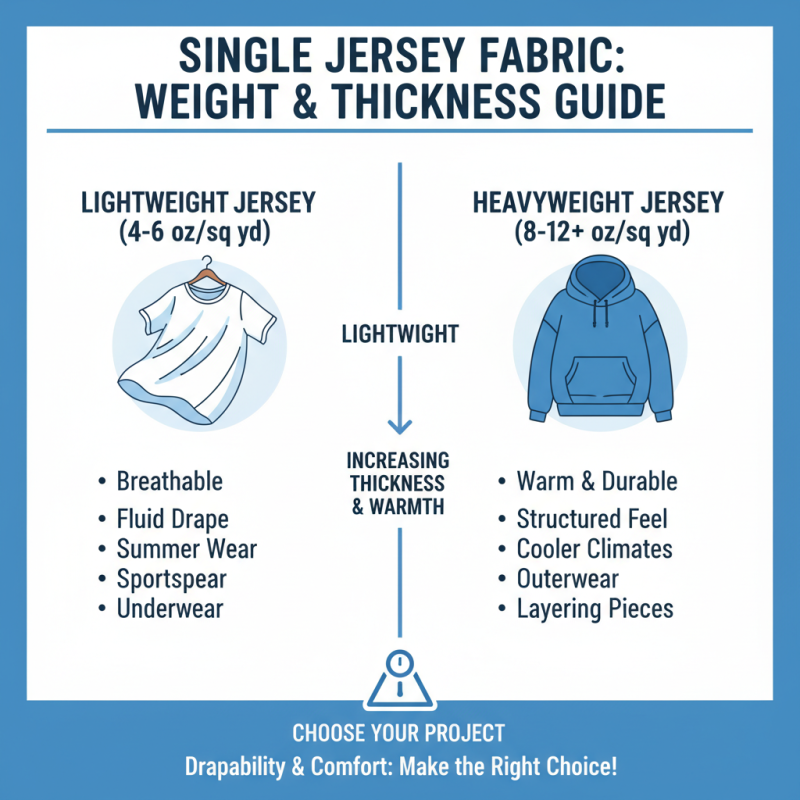
Choosing the right single jersey fabric for your project involves understanding fabric weight and thickness. The weight of the fabric significantly affects the drapability and feel. Generally, a lighter fabric is more breathable, ideal for summer wear. A heavier jersey offers more structure and warmth, perfect for cooler climates or layered outfits.
When evaluating thickness, consider the garment's purpose. Thicker fabrics tend to be more durable but may restrict movement. Lighter options provide flexibility but might be transparent. It's crucial to envision how the fabric will perform in real-life scenarios.
Tips: Test swatches before purchasing. This helps to evaluate how each weight feels against the skin. Also, think about how the fabric will behave after washing. Some lighter jerseys may stretch or lose shape. Take time to reflect on your project's needs and choose wisely.
Choosing the Right Fiber Content for Desired Feel and Durability
Choosing the right fiber content in single jersey fabric is crucial for achieving the desired feel and durability in your project. Natural fibers, such as cotton, often provide a soft and breathable experience. However, cotton can wear out faster than synthetic fibers. If you're aiming for longevity, consider blends that incorporate polyester. Blends can offer both comfort and strength.
Another option is modal, known for its silky finish. It drapes beautifully and feels luxurious, but keep in mind its care requirements. While modal is durable, it may require delicate washing to maintain its appearance. Balance aesthetics with practicality based on your project needs.
Don’t overlook the importance of stretch. Fabrics with elastane can enhance flexibility, making them ideal for activewear. However, over-reliance on stretch can lead to undesirable fits after washing. Always test your fabric choice on a sample piece to observe how it behaves. Fiber content matters significantly; the right fabric can elevate your design while ensuring it stands the test of time.
Assessing Color Fastness and Printability for Fashion Needs
When selecting a single jersey fabric for fashion projects, color fastness is crucial. It determines how well the fabric retains its color after multiple washes. Testing this can save time and effort in the long run. A fabric that fades quickly will disappoint both designers and consumers. To evaluate color fastness, consider using wash and lightfastness tests. These will reveal how the fabric holds up in real-world situations.
Printability is another important aspect. The fabric's texture impacts how well designs transfer onto the material. A smooth surface may yield sharper prints, while a rough texture might soften the design. It’s essential to test the fabric with your specific printing method, whether screen or digital. Some fabrics may appear vibrant yet fail during production. This is a common oversight. Don't assume every jersey will perform identically.
Choosing the right fabric is a process of trial and error. Sometimes, a fabric can seem perfect but lead to disappointing results when printed. It’s valuable to document these findings and adjust your selections over time. This reflection will enhance your future projects and lead to better material choices. Evaluate your fabrics carefully, and remember that experimentation is key.
Color Fastness and Printability of Fashion Single Jersey Fabrics
Comparing Cost and Availability of Fashion Single Jersey Options
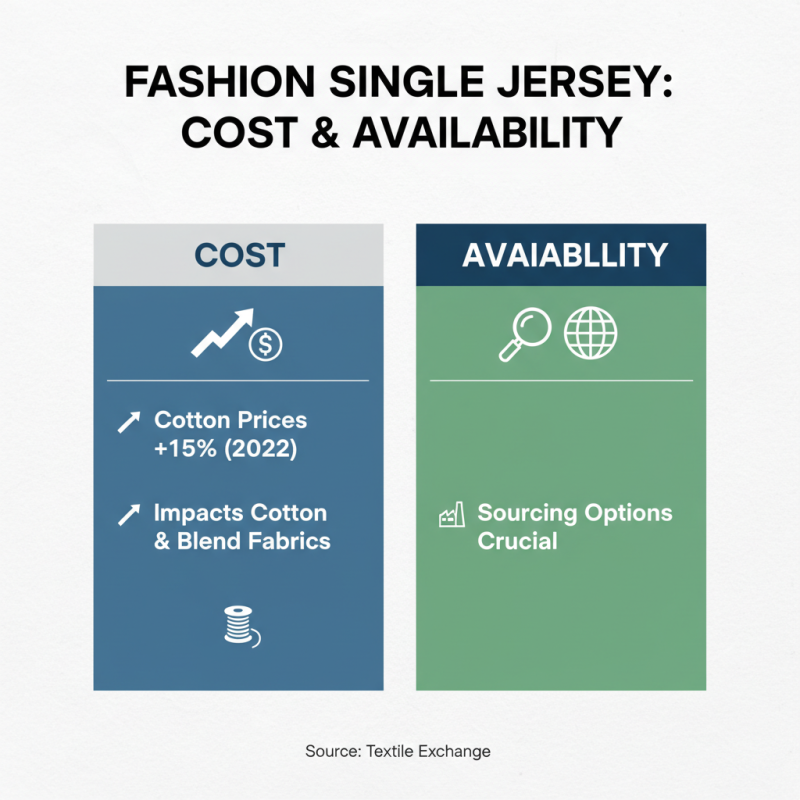
When considering fashion single jersey fabric, cost and availability are key factors. According to the Textile Exchange, the cotton market faced a 15% price increase in 2022. This fluctuation impacts the cost of single jersey fabrics, as they often utilize cotton or cotton blends. As a result, manufacturers must carefully evaluate their sourcing options.
Availability can vary widely based on geographic location and market demands. In regions with robust cotton production, such as India and China, the supply may be more stable. However, unexpected weather events can disrupt yields. A study by the International Cotton Advisory Committee noted that extreme weather could reduce crop output by up to 30%. Brands must remain agile in their fabric sourcing to avoid production delays.
It's vital to analyze not just prices but also the quality of available fabrics. While cheaper options may exist, they sometimes compromise durability. The fabric's weight, stretch, and finish can affect the final product. According to recent insights, about 40% of fashion returns are due to fabric issues. This statistic highlights the importance of investing in well-sourced materials despite potential higher costs. Balancing affordability and quality is essential for successful fashion projects.