10 Essential Tips for Choosing Thin Single Jersey Fabric for Your Projects?
Choosing the right fabric is crucial for any project. Thin Single Jersey Fabric is a popular option for many designers and crafters. Its lightweight nature makes it versatile and comfortable. However, not all Thin Single Jersey Fabrics are created equal.
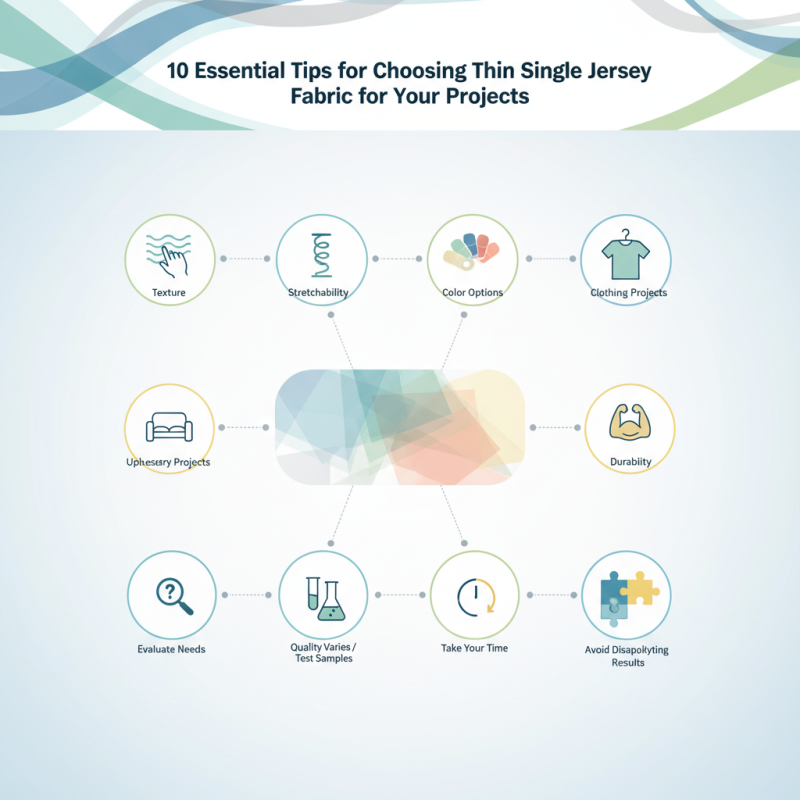
When selecting this fabric, consider various factors. The texture, stretchability, and color options can greatly influence your project outcome. Some fabrics may feel great but lack durability. Others might be perfect for clothing but unsuitable for upholstery. It's essential to evaluate your needs carefully.
Remember, even the best Thin Single Jersey Fabric may present challenges. Quality varies significantly, making it vital to test samples before committing. Take your time with this process. Small mistakes can lead to disappointing results in the final product.
Understanding the Characteristics of Thin Single Jersey Fabric
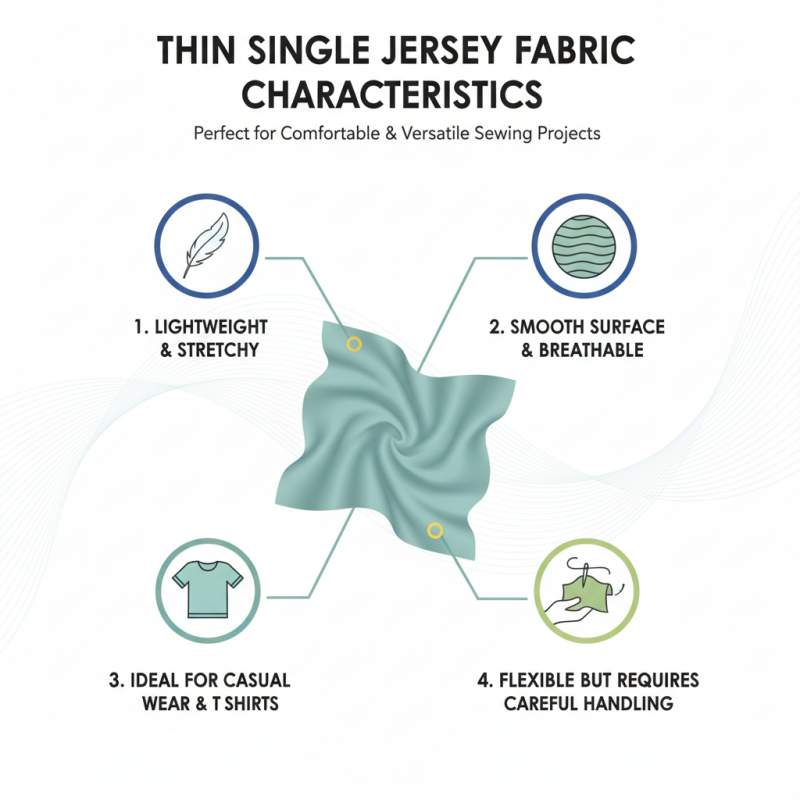
Thin single jersey fabric is a popular choice for various sewing projects. It is lightweight and stretchy, making it ideal for casual wear, t-shirts, and more. Understanding its characteristics is crucial for successful outcomes. This fabric has a smooth surface and offers breathability. The stretch factor adds comfort and flexibility but may require careful handling.
When choosing thin single jersey fabric, look out for the weight and drape. Fabric that is too lightweight may slip during sewing. A good balance ensures ease while working on your project. Check the fabric's stretch recovery as well. Some fabrics lose their shape after washing, which could be disappointing.
Colors and prints can also impact your choice. Bright colors may show the seams more than darker shades. Consider your design carefully. The finishing of the fabric plays a role too. Some edges might curl, making them harder to sew cleanly. It's important to contemplate these aspects to avoid common pitfalls. By understanding these characteristics, you can make better decisions for your next project.
Identifying Appropriate Fabric Weight: Balancing Durability and Comfort
When selecting thin single jersey fabric, weight plays a crucial role. Fabric weight impacts both durability and comfort. Generally, lighter fabrics are softer and more breathable. However, they may lack the strength needed for certain projects. You should think about how the fabric will be used. Will it be stretched often? If so, consider a slightly heavier option for better durability.
Comfort is another key factor. A fabric that feels good against the skin is essential. Lighter fabrics often provide a pleasant touch. However, a very thin fabric may become transparent when stretched. This can lead to an unflattering appearance. Balancing these elements requires careful consideration. It’s not always straightforward. You might find that a fabric initially feels great but doesn’t hold up well over time.
Reflecting on your needs is important. Consider the intended use and wear patterns. Test the fabric before committing. Look for pilling, fading, or distortion after washing. Sometimes, a fabric seems appropriate but reveals flaws later. Take time to understand weight distribution and stretch. Knowing how to balance durability with comfort will lead to better project outcomes.
Fabric Weight Comparison for Thin Single Jersey Projects
Assessing Stretch and Recovery Properties in Jersey Fabric
When choosing thin single jersey fabric, assessing the stretch and recovery properties is crucial. Stretch is about how much the fabric can expand. Jersey fabric often features great elasticity. This makes it comfortable to wear and easy to move in. Look for fabric that returns to its original shape after stretching. A fabric that loses its shape quickly can lead to disappointment with your finished project.
Not all jersey fabrics are made equal. Some may stretch too much, rendering your design floppy. You may have experienced this issue before. The perfect balance between stretch and recovery will ensure your clothes fit well. Testing the fabric by gently pulling a small section can help. This simple act provides insight into its flexibility. If it snaps back at once, that's a good sign! However, if it sags, reconsider your choice.
Visualizing how the fabric will behave is essential. Imagine wearing it on a busy day. How will it hold up? Will it shape around your body or lose its form? Sometimes, it's hard to predict behavior until you test the fabric in real-life scenarios. Don't rush the decision-making process. Take time to explore different options and their properties. You may find hidden gems or realize what to avoid for future projects.
Evaluating Breathability and Moisture-Wicking Capabilities
When choosing thin single jersey fabric, breathability and moisture-wicking capabilities should be top priorities. Breathability is crucial for comfort, especially in warmer weather. According to research, fabrics with high breathability allow air to flow, enhancing wearability. Fabrics like cotton provide decent breathability, while blends with synthetic fibers can offer improved performance.
Consider the moisture-wicking properties of the fabric. Fabrics that effectively wick moisture can keep you dry during physical activity. Studies show that materials designed for moisture management can increase comfort by up to 30%. Look for fabrics labeled as "moisture-wicking." This indicates that they pull sweat away from the skin, promoting a cooling effect.
Tip: Always check the fabric’s construction. A tighter knit may offer better moisture control. However, it might compromise breathability. Another consideration is the weight of the fabric. Lightweight options are often more breathable but can lack durability. Finding that balance is key to a successful project.
10 Essential Tips for Choosing Thin Single Jersey Fabric for Your Projects
| Tip |
Description |
Breathability Rating |
Moisture-Wicking Capability |
Best Uses |
| 1. Choose the Right Weight |
Select fabric weight based on the intended use to ensure comfort. |
Medium |
Moderate |
T-shirts, Casual Wear |
| 2. Check Fabric Stretch |
Assess the stretch to ensure it meets design needs and comfort. |
High |
Good |
Activewear |
| 3. Look for Eco-Friendly Options |
Choose sustainable materials that reduce environmental impact. |
Variable |
Variable |
Everyday Clothing |
| 4. Review Colorfastness |
Ensure colors remain vibrant after washing and wearing. |
N/A |
N/A |
All Applications |
| 5. Evaluate Shrinkage |
Choose pre-shrunk fabrics to retain original size after washing. |
Low |
N/A |
Casual Garments |
| 6. Test Softness |
Select fabrics that feel good against the skin. |
High |
Minimal |
Lounge Wear |
| 7. Consider Durability |
Check fabric strength for longevity in wear. |
Medium |
Good |
Workwear |
| 8. Check Stitchability |
Ensure fabric works well with different sewing techniques. |
N/A |
N/A |
All Types |
| 9. Assess Pattern Versatility |
Look for fabrics suitable for various designs and styles. |
N/A |
N/A |
Fashion Apparel |
| 10. Price and Quality Balance |
Compare prices while ensuring quality is not compromised. |
Variable |
Variable |
All Projects |
Cost Comparison: Thin Single Jersey Fabric vs. Other Fabrics in the Market
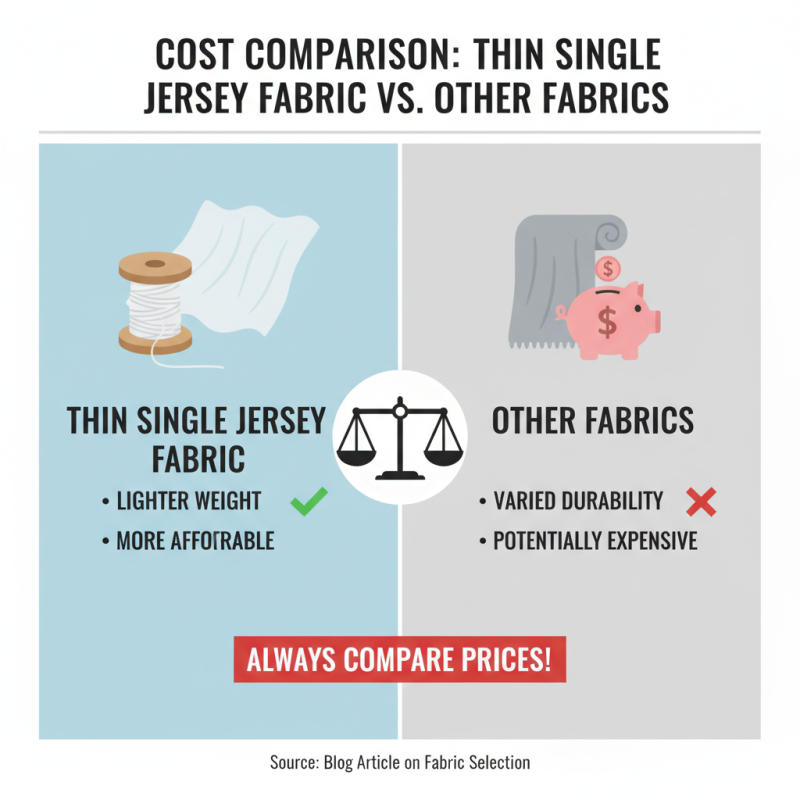
When selecting fabrics, cost is a crucial factor. Thin single jersey fabric often holds a competitive edge over other materials. This knitted fabric is lighter and more affordable than most. Still, it’s vital to compare prices before making a decision. Some fabrics promise durability but may break the bank.
Let’s explore the price range. Thin single jersey usually costs less per yard. It’s common to find it at around $5 to $10. In contrast, cotton, and polyester blends can be pricier, sometimes exceeding $15. However, quality can differ. Cheaper fabrics may wear faster. They often develop pilling or lose shape after washing.
Consider where you'll use the fabric. For everyday wear, the cost of thin single jersey might be justified. However, for high-end projects, investing in more luxurious options could be wise. Reflect on how often you will wash the garment. Frequent washing can impact the longevity of cheaper fabrics. Balancing cost with your project’s needs is essential.