How to Choose the Best Thin Suit Fabric for Your Needs?
Choosing the right Thin Suit Fabric can significantly enhance your comfort and style. According to a recent textile industry report, lightweight fabrics have gained popularity, with a 30% increase in demand over the past three years. Many professionals now prefer suits made from breathable materials that offer both elegance and practicality.
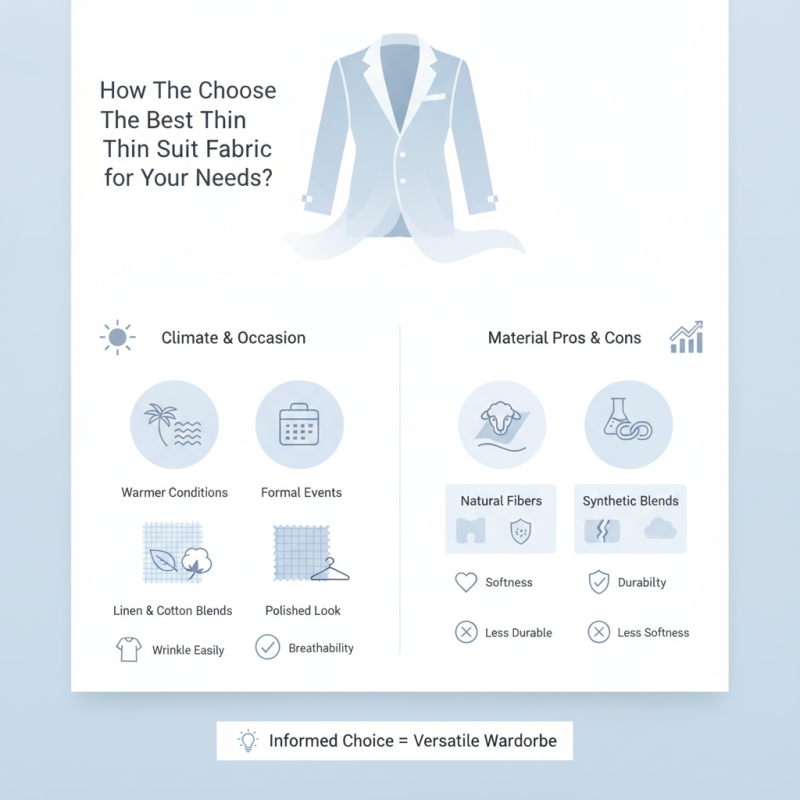
When selecting Thin Suit Fabric, consider factors like climate and occasion. In warmer conditions, breathable fabrics like linen or cotton blends reduce heat retention. However, they may wrinkle more easily. This trade-off is crucial for achieving a polished look without sacrificing comfort.
It's essential to weigh the benefits and drawbacks of various materials. While synthetic blends offer durability, they might lack the softness of natural fibers. An informed choice about Thin Suit Fabric can greatly impact your wardrobe's versatility. Relying on industry insights can guide you in making the best decision.
Understanding Different Types of Thin Suit Fabrics Available
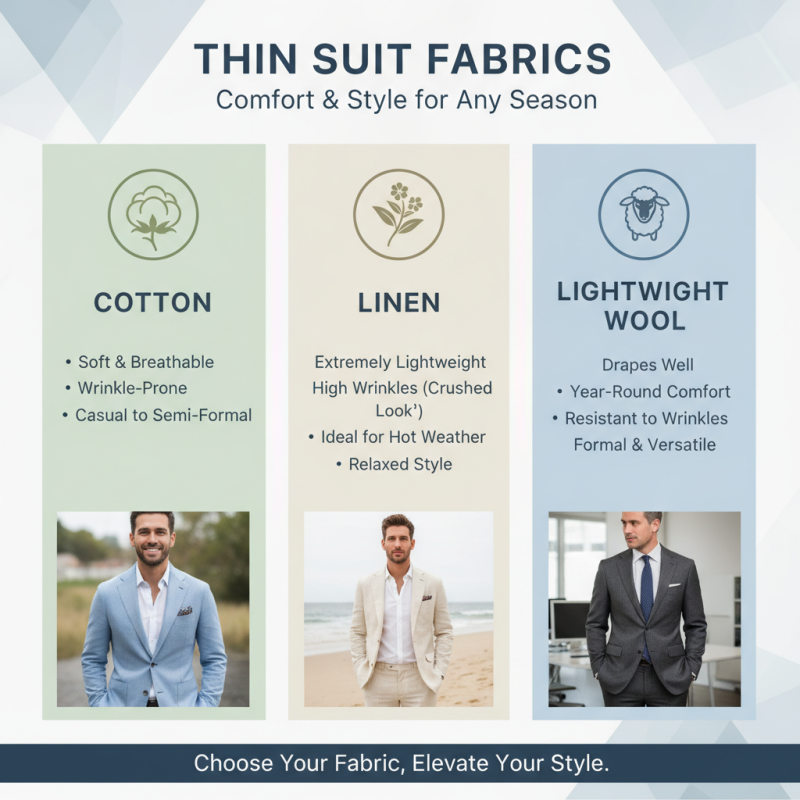
Choosing the right thin suit fabric is essential for comfort and style. Various options are available, and understanding them can guide your choice. Common thin fabrics include cotton, linen, and lightweight wool. Each material offers unique benefits and drawbacks.
Cotton is breathable and soft, perfect for warm weather. However, it may not hold its shape well over time. Linen, on the other hand, is incredibly lightweight and perfect for summer. Yet, it wrinkles easily. Lightweight wool blends provide durability and a polished look but might not be as airy as cotton or linen.
**Tips:** Consider the climate where you will wear the suit. Breathability is key in hot conditions. Also, think about your lifestyle. If you need a suit for multiple events, choose a fabric that combines versatility and style. Finally, be aware that some fabrics may require special care. A little research goes a long way.
Evaluating Fabric Weight and Breathability for Comfort
Choosing the right fabric for a thin suit is crucial for comfort. Fabric weight plays a vital role in how it feels against your skin. Lightweight fabrics, like linen, are great for warmer climates. They offer breathability, which helps with ventilation. A breathable fabric can make a big difference on a hot day. However, weighing too lightly can result in sheer looks, compromising style.
Breathability is not just about weight. It’s also about the material’s structure. Natural fibers tend to be more breathable than synthetic ones. For example, cotton allows air to flow freely, keeping you cool. In contrast, polyester can trap heat, leading to discomfort. Test different fabrics before you choose. Touch them and see how they feel. Consider how each fabric drapes. An ideal suit fabric should not only fit well but also feel pleasant during wear.
Sometimes, the best fabric for your needs might not be the most popular option. Everyone has their own preferences and body types. Some may find heavier fabrics provide a luxurious feel, while others prefer lightweight options. Pay attention to your environment and personal style. Finding a balance between weight and breathability is key. Make sure you reflect on what truly works for you.
How to Choose the Best Thin Suit Fabric for Your Needs? - Evaluating Fabric Weight and Breathability for Comfort
| Fabric Type |
Weight (g/m²) |
Breathability |
Comfort Level |
Best Uses |
| Cotton |
150 |
High |
Very Comfortable |
Casual and Office Wear |
| Linen |
180 |
Very High |
Extremely Comfortable |
Summer Wear |
| Wool |
250 |
Medium |
Very Comfortable |
Formal Wear |
| Polyester |
160 |
Medium |
Comfortable |
All-Season Wear |
| Silk |
100 |
High |
Very Comfortable |
Luxury and Evening Wear |
Considering Seasonal Appropriateness in Fabric Selection
Choosing the right fabric for a thin suit is crucial, especially with seasonal variations in mind. As summer approaches, lightweight, breathable fabrics become essential. Look for materials like linen or lightweight cotton. They allow air circulation, keeping you cool in heat. However, linen wrinkles easily; it can be a challenge for a polished look.
In colder months, consider fabrics that provide warmth without bulk. Wool blends can be a great option. They offer insulation while still being thin. Merino wool stands out for its softness and ability to regulate body temperature. But, be wary of its finer qualities. Some may find it too heavy for a truly thin suit.
Ultimately, the best fabric choice aligns with both the climate and your comfort. Testing different materials can reveal unexpected preferences. Remember, even minor details like texture can impact how you feel throughout the day. Don’t shy away from exploring various options before settling on the perfect fabric.
Assessing Durability and Maintenance Requirements of Fabrics
When selecting thin suit fabrics, durability and maintenance are vital. Durability often correlates with the fabric's ability to withstand wear and tear. According to industry reports, high-twist fabrics can show better resilience than standard weaves. Fabrics such as wool blend offer a balance between lightweight feel and longevity, making them an excellent choice for regular use.
Maintenance is equally important. Fabrics that resist staining or wrinkling require less upkeep. For instance, polyester blends are known for their low-maintenance qualities, as they frequently hold their shape and are easy to clean. However, natural fibers, while luxurious, may demand a gentler approach. Regular dry cleaning may wear them down over time.
Tip: Always check the fabric care label before purchasing. Consider how often you’ll wear the suit and whether you prefer easy care or luxurious feel. If you travel often, a wrinkle-resistant fabric can save time and effort. Finding the right balance between durability and maintenance can significantly impact your long-term satisfaction with your suit.
Durability and Maintenance Requirements of Thin Suit Fabrics
Comparing Cost and Quality in Thin Suit Fabric Options
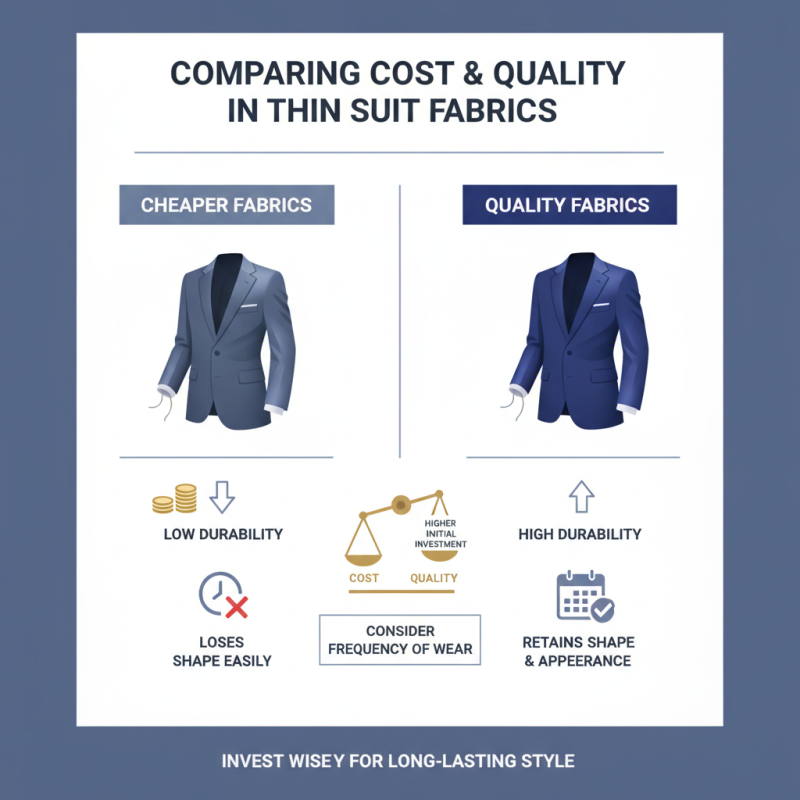
When it comes to choosing a thin suit fabric, cost and quality are crucial factors. Many options exist, but not all are created equal. Cheaper fabrics might save money initially, but they often lack durability. Consider how often you plan to wear the suit. Frequent wear might justify a higher investment in quality fabric. High-quality fibers tend to retain their shape and appearance over time.
One should also examine the fabric's texture. A fabric that looks good on the rack may not feel comfortable. Take time to feel the fabric against your skin. Breathability is essential, especially in warmer weather. Sometimes, you must pay extra for a lightweight fabric that offers comfort and style. On the other hand, expensive fabrics may not always mean superior quality.
Research is key when examining different materials. Some cuts and weaves may work better within your budget while still providing the look you desire. Feel free to ask a tailor or fabric expert for insight. Their experience can guide you towards better choices. Evaluating both cost and quality is more than a shopping task; it's an investment in your personal style and comfort.