China Best Knit Fabric Suppliers for Global Buyers?

China remains a major sourcing base for Knit Fabric, supported by extensive yarn, dyeing, knitting, and garment production capacity. For global buyers, this depth can shorten development cycles and simplify multi-stage purchasing. Yet factory scale alone does not guarantee stable quality.

Textile Exchange’s Materials Market Report 2024 estimated global fiber production at 124 million tonnes in 2023. It also projected growth toward 160 million tonnes by 2030. This expansion increases material choices, but it also raises questions about recycled content, traceability, energy use, and wastewater management. The report shows why responsible sourcing now requires more than comparing fabric prices.

Details matter.

A reliable Chinese supplier should explain gauge, composition, weight, width, shrinkage, colorfastness, and testing methods. Buyers should request recent laboratory reports and production samples, not only digital catalogs. The International Trade Centre and WTO trade data also confirm China’s continuing importance in global textile commerce, although market rankings can change with demand, tariffs, and logistics conditions.

A strong supplier can discuss lead times clearly. They should identify knitting capacity, dye-house controls, minimum order quantities, and corrective-action procedures. Certifications such as GRS, OEKO-TEX, and ISO systems may support evaluation, but certificates require verification. A certificate is not proof of perfect performance.

This guide examines China’s leading Knit Fabric suppliers through product capability, quality systems, export experience, sustainability evidence, and communication reliability. Some supplier information may change quickly. That is an uncomfortable limitation, and buyers should recheck factory records before placing a major order.
China Best Knit Fabric Suppliers for Global Buyers?

Define Knit Fabric: HS 6006, Fiber Content, GSM, and Stretch Metrics

China’s knit fabric suppliers often serve buyers seeking jersey, rib, interlock, and stretch constructions. Knit fabric is formed by interlooping yarns, not crossing yarns at right angles. This structure creates softness, flexibility, and controlled drape. Under HS 6006, many knitted or crocheted fabrics are classified as “other” knitted fabrics. However, the correct tariff code may depend on coating, fiber type, width, and national customs rules. Verify it with a qualified customs professional before shipment.

Fiber content should state the actual blend, such as 95% cotton and 5% elastane. Do not rely only on a sales sheet. Request a laboratory report and compare it with the roll label. GSM means grams per square meter. A 180 GSM jersey feels lighter than a 260 GSM interlock. Measure GSM after conditioning samples, because moisture and finishing can change results. Stretch also needs clear numbers. Four-way stretch is not a sufficient specification. Ask for crosswise stretch percentage, lengthwise stretch, and recovery after repeated extension. A fabric stretching 40% but recovering only 75% may develop bagging at knees or elbows. Test samples after washing and drying. Small differences matter. I have seen attractive swatches fail production because recovery was never tested. Supplier claims can be useful, but documented methods are more reliable. One weakness remains: test results from different laboratories may not match perfectly, so buyers should specify the same standard, load, temperature, and recovery time.
Map China’s Supply Base: 2023 Textile Exports Reached US$293.6B

China Best Knit Fabric Suppliers for Global Buyers?

China’s textile and apparel exports reached US$293.6 billion in 2023. The figure comes from China National Textile and Apparel Council data. It includes textile materials, fabrics, and finished apparel. Exports declined from 2022 levels, reflecting weaker global demand and inventory adjustments. The scale remains significant.

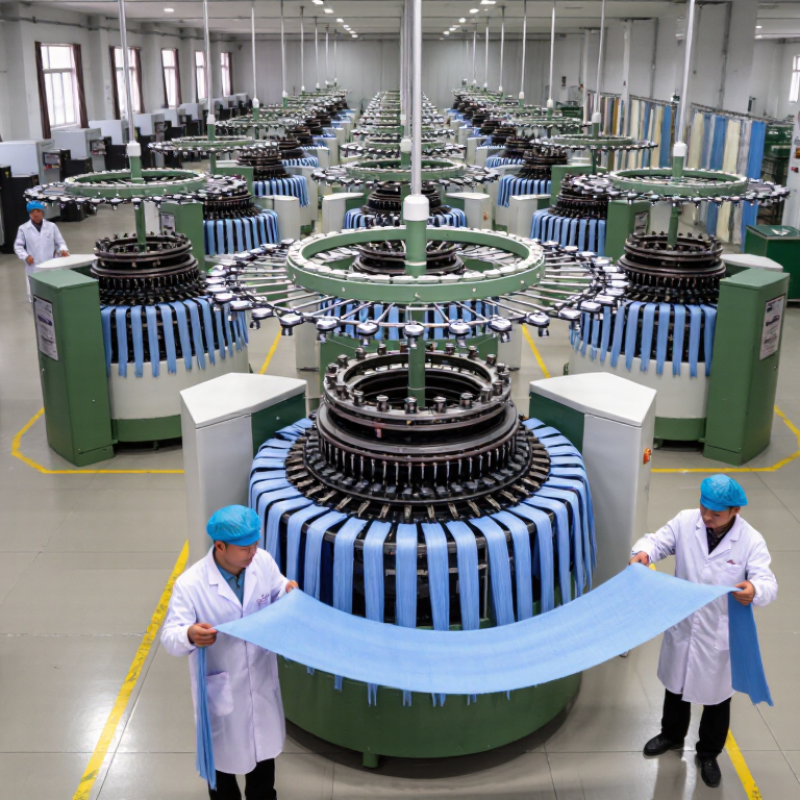
China Customs data shows textile exports contributed about US$134.5 billion. Apparel exports accounted for roughly US$159.1 billion. These figures help buyers understand the supply base beyond individual factories. Major knitting capacity is concentrated in Zhejiang, Jiangsu, Guangdong, and Fujian. Each region offers different strengths, from circular knitting to functional finishing.

UN Comtrade data provides another useful comparison. However, product classifications differ between databases. That detail is easy to overlook. Buyers should verify HS codes before comparing suppliers or trade values. A factory claiming “export experience” still requires evidence. Request recent test reports, production photos, fabric specifications, and shipment references. Check GSM, fiber composition, width, shrinkage, pilling, and colorfastness. Small differences can affect cutting efficiency and final costs.

In practical sourcing work, sampling remains essential. A 220 GSM cotton blend may feel stable during sampling, then change after washing. It happens. Laboratory results also cannot replace process audits. Review knitting equipment, dyeing controls, wastewater documentation, and batch traceability. The best supplier is not always the largest exporter. Consistent communication and transparent correction records often matter more.

Screen Suppliers Using ISO 9001, OEKO-TEX STANDARD 100, and GRS

China remains a major sourcing base for knit fabrics, but low price alone cannot identify a dependable supplier. A practical screening process should begin with ISO 9001, OEKO-TEX STANDARD 100, and GRS documentation. The ISO Survey 2022 recorded more than 1.26 million ISO 9001 certificates worldwide, showing how widely quality systems are used. Yet a certificate should support verification, not replace it.

Ask for the current certificate, certification scope, factory address, expiry date, and issuing body. ISO 9001 should cover relevant production activities, not only office administration. Request inspection records, shade-control reports, and corrective-action examples. Small details matter. A supplier that cannot explain batch tracking may create avoidable claims.

OEKO-TEX STANDARD 100 testing focuses on harmful substances, with requirements adjusted by product use and skin contact. Ask whether the certificate covers the exact fabric composition, dyeing process, and intended product class. GRS is more specific to recycled content and chain of custody. Its standard requires at least 20% recycled material for certification, according to the GRS standard framework. Textile Exchange reported global fiber production at 124 million tonnes in 2023, with growth projected toward 160 million tonnes by 2030. Recycled claims therefore need careful document matching. Check transaction certificates and material percentages.

A factory audit still matters. Certification dates can be overlooked. Samples may pass while bulk production changes. That risk is real. A stronger buyer keeps sealed fabric swatches, approves color standards, and links each shipment to test records. My own caution is simple: certificates reduce uncertainty, but they never eliminate the need for physical inspection and honest supplier communication.

China Best Knit Fabric Suppliers for Global Buyers? - Screen Suppliers Using ISO 9001, OEKO-TEX STANDARD 100, and GRS

Supplier-screening matrix for anonymous China-based knit-fabric production profiles. Verify current certificates, scope, transaction details, and test reports before placing an order.

Supplier Profile Typical Knit Fabric Focus Common Fiber Options ISO 9001 Screening Requirement OEKO-TEX STANDARD 100 Screening Requirement GRS Screening Requirement Typical MOQ Range Typical Sample Lead Time Typical Bulk Lead Time Recommended Buyer Verification Screening Result
Profile A
Large Export-Oriented Mill
Single jersey, interlock, rib, pique, French terry, and fleece Organic cotton, conventional cotton, recycled polyester, viscose, elastane blends Current ISO 9001 certificate with the legal manufacturing entity, covered production scope, certificate number, validity period, and accredited certification body Valid STANDARD 100 certificate matching the relevant fabric article, fiber composition, color range, and product class Valid GRS certificate covering the facility and applicable recycled-material processing scope; transaction certificate required for certified shipments 300–1,000 kg per color or construction, subject to yarn and dyeing requirements 7–14 calendar days for standard development; longer for custom knitting or special finishing 25–45 calendar days after lab-dip, color, construction, and payment approval Check certificate databases or issuing bodies, request recent test reports, conduct a factory audit, and confirm production capacity with purchase-order records Shortlist Candidate
Profile B
Mid-Sized Circular-Fabric Mill
Recycled polyester jersey, recycled nylon knit, mesh, spacer fabric, and sportswear knits Recycled polyester, recycled nylon, elastane, cotton blends Certificate must identify the actual knitting, dyeing, or finishing site rather than only an administrative office Certificate and test report should cover restricted substances, colorants, formaldehyde, heavy metals, and the final finished fabric GRS certification should cover recycled-content handling and chain of custody; verify the percentage and material type stated on the transaction certificate 500–2,000 kg per color, depending on recycled yarn availability 10–18 calendar days for recycled-yarn development and laboratory approval 30–50 calendar days, depending on yarn stock, dyeing queue, and finishing requirements Compare purchase-order material claims with shipping documents, inspect segregation procedures, and request mass-balance or transaction documentation where applicable Shortlist Candidate
Profile C
Fashion and Small-Batch Specialist
Fine-gauge jersey, rib, pointelle, brushed knit, jacquard, and fashion-weight fabrics Cotton, modal, lyocell, viscose, polyester, wool, and blended yarns ISO 9001 evidence should include the exact site and a scope relevant to textile manufacturing; an expired or incomplete certificate is not acceptable Require a current certificate for the final fabric, not only a certificate for the yarn or greige fabric GRS is relevant only when recycled content is claimed; request certification evidence for every certified article and shipment 100–500 kg per color for stocked constructions; custom designs may require higher minimums 10–21 calendar days for custom structures, print, or finishing 30–60 calendar days after final approval, depending on complexity and minimum dye lot Approve a sealed pre-production sample, verify shrinkage and colorfastness, and confirm whether low MOQ is based on stock or new production Conditional Shortlist
Profile D
Cost-Focused Commodity Mill
Basic single jersey, cotton-polyester jersey, rib, pique, and fleece Conventional cotton, polyester, cotton-polyester blends, elastane Do not accept an ISO 9001 logo alone; require a verifiable certificate showing issuer, scope, site address, and validity Require a current STANDARD 100 certificate and a test report for the exact composition and color supplied Do not treat recycled-content claims as GRS claims without a valid certificate and transaction documentation 1,000–3,000 kg per color or construction 7–14 calendar days for standard articles 25–40 calendar days after color and quality approval Use third-party pre-shipment inspection, laboratory testing, GSM and width checks, shrinkage testing, and colorfastness testing Verify Before Order
Profile E
Integrated Knitting and Dyeing Site
Performance jersey, moisture-management knit, compression fabric, interlock, and technical mesh Polyester, recycled polyester, nylon, recycled nylon, elastane, and blends Certificate scope should include the relevant knitting, dyeing, finishing, quality-control, and storage activities where applicable Require testing of the finished article, especially for coatings, prints, antimicrobial finishes, water-repellent finishes, and elastane blends For GRS articles, verify recycled inputs, certified processing sites, labeling rules, and transaction certificates for the ordered quantity 500–1,500 kg per color or construction 14–28 calendar days for functional finishes and performance testing 35–60 calendar days, depending on performance approvals and finishing processes Request fabric-performance data including pilling, colorfastness, dimensional stability, stretch recovery, moisture management, and hydrostatic or air-permeability results where relevant Shortlist Candidate
Profile F
Trading and Outsourced-Production Model
Broad catalog of jersey, rib, fleece, mesh, and blended knit fabrics Usually cotton, polyester, viscose, modal, elastane, and recycled-fiber blends Certification must belong to the actual production facility; a trader’s certificate cannot substitute for the manufacturer’s certificate Confirm that the STANDARD 100 certificate names the actual manufacturer or covered facility and matches the final article Confirm that every facility handling certified material is included in the relevant chain of custody and that transaction documents match the seller 200–1,000 kg, but minimums can vary by subcontracted mill 10–21 calendar days, subject to subcontractor availability 30–60 calendar days with higher schedule risk Identify all subcontractors, obtain written authorization, audit the production site, and make the purchase contract identify the approved manufacturing location Higher Verification Risk

Buyer note: ISO 9001 demonstrates a quality-management-system framework, OEKO-TEX STANDARD 100 addresses harmful-substance testing for textile articles, and GRS verifies recycled-material claims together with chain-of-custody requirements. Certificate status, scope, facility identity, and transaction documentation should be checked for each order.

Compare Suppliers by MOQ, GSM, Lead Time, Defect Rate, and Incoterms

Choosing a knit fabric supplier requires more than checking catalog photos. I compare MOQ, GSM, lead time, defect rate, and Incoterms together. A 500-kilogram MOQ may suit a large order, but it can burden a small collection. Always request a physical swatch. Measure its GSM after washing, not only before production. A 180 GSM jersey may become lighter after finishing. That difference affects drape, opacity, and cutting yield.

Tips: Ask for recent inspection records and a clear defect definition. Confirm whether the quoted defect rate covers holes, shade variation, skew, and stitching faults. A supplier reporting 1% defects sounds reliable, but the sampling method matters. Request an inspection plan before signing. Also compare lead times by stage: knitting, dyeing, finishing, and packing. Twenty-five days may exclude laboratory approval or holiday delays.

Incoterms also change the real cost. Under FOB, the buyer usually manages international freight after loading. Under DDP, the supplier may handle delivery and import procedures, but the price includes more variables. Check who carries risk at each transport point. I once underestimated color approval time by several days. That mistake was avoidable. Build a buffer of five to seven working days, especially for custom colors. Reliable suppliers should answer specific questions with documents, not optimistic promises. Their willingness to explain limitations often reveals more than a low quotation.

Verify Samples, Lab Reports, and Social Compliance Before Contracting

China’s Best Knit Fabric Suppliers for Global Buyers?

Verify Samples, Lab Reports, and Social Compliance Before Contracting

China’s knit fabric market offers scale, but capacity alone cannot prove consistency. Global fiber production reached 124 million tonnes in 2023, according to Textile Exchange’s 2024 Materials Market Report. The report projects nearly 160 million tonnes by 2030. This growth makes traceable quality checks more important. Request a pre-contract sample from the exact production route. Check width, GSM, stretch recovery, shade, hand feel, and wash shrinkage. Keep a signed reference sample. A showroom swatch may not match bulk output.

Ask for recent laboratory reports, not unsupported scans. Each report should identify fiber composition, test methods, sample date, lot number, and laboratory accreditation. Useful tests include colorfastness, pilling, dimensional stability, tensile strength, and restricted-substance screening. Compare every result with your purchase specification. A passing result may still represent the wrong lot. Retest a sealed production sample before shipment. This step costs time.

Social compliance requires evidence beyond a polished factory tour. The International Labour Organization estimates that textile, clothing, and footwear supply chains employ over 60 million people worldwide. Request the latest audit, corrective-action records, worker interview findings, payroll samples, working-hour logs, and fire-safety evidence. Verify whether subcontractors are disclosed. Speak privately with workers when possible. An audit can miss problems. My checklist would still need revision after each failed assumption. Some gaps should remain visible during negotiation.

China Knit Fabric Supplier Verification Benchmarks

Reference limits and grading conventions commonly used in apparel-fabric purchasing. Confirm the buyer’s exact specification, destination-market regulation, and applicable test method before contracting.

The chart highlights measurable checkpoints: fabric weight tolerance, pH, colorfastness, and restricted-substance control. Samples should be tested by a competent independent laboratory, while social-compliance evidence should be verified through current audit records and corrective-action follow-up.