What Is the Best China Knitted Apparel Fabric Supplier?

Choosing the best China Knitted Apparel Fabric supplier requires more than comparing prices or browsing polished product photos. It demands practical evaluation, technical knowledge, and evidence from real production. A dependable supplier should explain yarn composition, knitting structure, fabric weight, stretch recovery, colorfastness, shrinkage, and pilling performance clearly. Ask for recent laboratory reports and physical samples. Touch the fabric. Wash it. Stretch it repeatedly.

Orsola de Castro, a recognized fashion sustainability expert and co-founder of Fashion Revolution, has said, “The most sustainable garment is the one already in your wardrobe.” Her statement reminds buyers to value durability over short-term savings. This principle matters when selecting Knitted Apparel Fabric for sportswear, underwear, casualwear, or children’s clothing. A supplier offering stable quality can reduce returns, waste, and unnecessary replacement orders.

China has many capable mills, but capabilities differ widely. Some specialize in cotton jersey, while others perform better with recycled polyester, rib knit, interlock, or functional blends. A strong supplier should provide transparent factory information, consistent communication, and realistic lead times. Certifications may support trust, but they should not replace independent verification. That is where buyers sometimes become too confident.

The best choice may not be the cheapest quotation. It may be the mill that notices a weak seam, recommends a better blend, or admits a production limitation. Even experienced sourcing teams can miss small defects. Therefore, this guide compares supplier expertise, quality controls, customization ability, sustainability practices, and long-term reliability before naming the strongest options.
What Is the Best China Knitted Apparel Fabric Supplier?

What Defines a Reliable China Knitted Apparel Fabric Supplier?

A reliable China knitted apparel fabric supplier is defined by repeatable evidence, not a polished showroom. Textile Exchange’s 2024 Materials Market Report estimates that global fiber production reached 124 million tonnes in 2023. This scale increases pressure on suppliers to document fiber origins, recycled content, and processing stages. A dependable mill should provide lot numbers, production dates, fiber composition, and updated test reports.

Technical consistency matters more than attractive samples. Request shrinkage, colorfastness, pilling, GSM, width, and spirality results for the exact fabric lot. Testing should follow recognized methods, such as ISO or ASTM procedures.

The supplier should also explain its knitting structure, yarn count, finishing process, and tolerance range in plain language. Small details matter. Records matter more.

The 2024 Global Fashion Agenda Monitor reported that fashion’s progress toward climate targets remains insufficient, so environmental claims deserve careful checking. I would not treat a certificate alone as proof. Ask whether the certificate covers the factory, material, and current production period. A reliable supplier welcomes a pre-production sample, approves a sealed reference swatch, and reports defects before shipment. No supplier gets every lot perfect. The real test is whether problems are measured, communicated, and corrected. My own caution would be simple: fast replies can look professional, but stable results across three or more orders are stronger evidence. Pricing should also include testing, packing, lead time, and possible rework, not only the quoted fabric cost.
Which Factors Matter When Comparing Fabric Suppliers?

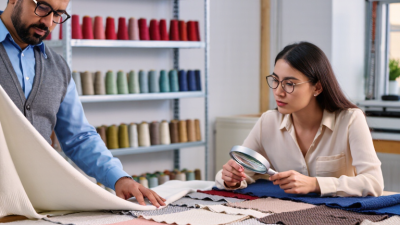
When comparing Chinese knitted apparel fabric suppliers, price should not lead the decision. Performance must come first. Request a lab dip, a 30-centimeter cutting, and a clear fiber-content report. Check GSM, width, stretch recovery, pilling, shrinkage, and colorfastness after washing. Test the fabric in the garment, not only under showroom lights. Ask how each result was measured and whether an independent laboratory verified it. A reliable supplier shares tolerances, test methods, and corrective-action records. Vague promises are warning signs.

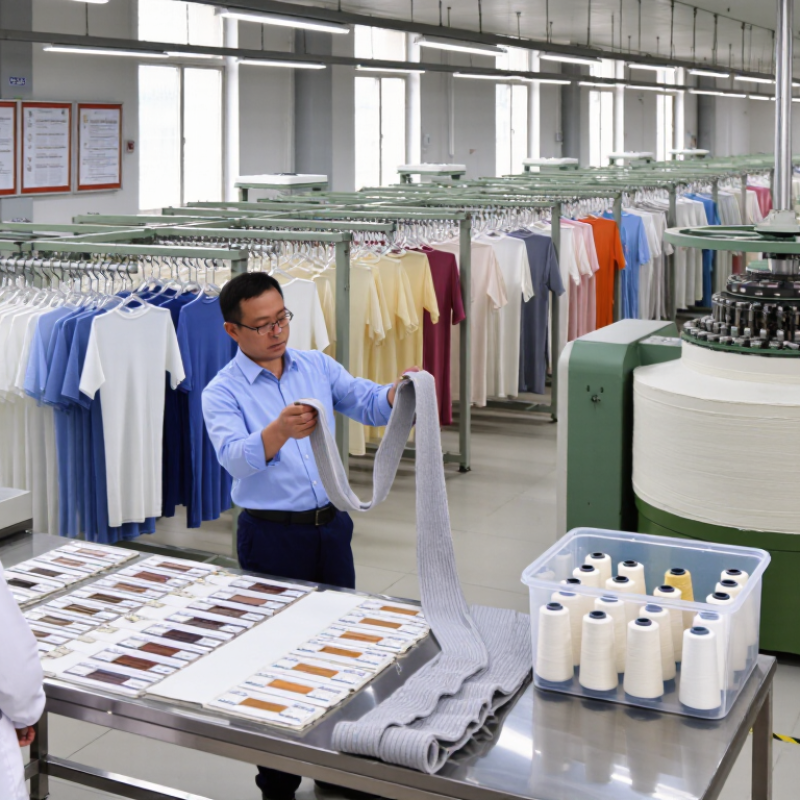
Production capability matters just as much. Review machine types, monthly capacity, dyeing controls, and quality inspection points. Confirm the minimum order quantity, sample timing, bulk lead time, packing method, and shipping terms in writing. Visit the facility when possible, or arrange a live video audit. Examine fabric rolls, inspection tables, storage conditions, and batch labels. Traceability reduces confusion when several colors or lots are involved. Communication also deserves a practical test. Send a technical specification and observe the response. Is it detailed, fast, and accurate? No supplier is perfect. My own comparison sheets can miss small risks, especially during urgent orders. Therefore, approve a pilot lot before committing to regular production. The best China knitted apparel fabric supplier is not simply the cheapest option. It is the partner whose quality, documentation, and response remain dependable when problems appear.

When comparing knitted apparel fabric suppliers, buyers should assess more than price. Quality consistency, testing and certifications, delivery reliability, MOQ flexibility, commercial value, and communication are practical factors for a balanced evaluation. The percentages below represent a suggested purchasing decision framework rather than data from any single company or brand.

How to Evaluate Fabric Quality, Certifications, and Production Capacity?

What Is the Best China Knitted Apparel Fabric Supplier?

Fabric quality starts with measurable evidence, not attractive samples. Request GSM, width, shrinkage, spirality, colorfastness, and pilling results for each knitted fabric. Test after washing, not only before it. A soft hand feel can hide poor dimensional stability. Textile Exchange’s Materials Market Report 2024 states that global fiber production reached about 124 million tonnes in 2023. This scale makes traceable material control increasingly important.

A soft hand feel can hide poor dimensional stability.

Certification checks should match the product and its risks. Ask for valid OEKO-TEX STANDARD 100, Global Recycled Standard, or ISO 9001 documentation when relevant. Verify the certificate number, scope, expiry date, and certified production site. Recycled claims also need transaction records, not only a logo. A certificate alone is not proof. It may cover one facility, while another facility handles dyeing. This is where buyers often miss details.

Production capacity needs physical verification.

Review knitting machine counts, gauges, monthly output, dye-house access, and recent delivery records. Ask for a capacity plan during peak months. Compare laboratory dips, bulk fabric, and shade-band approvals. An independent inspection can check roll length, stains, holes, and weight variation. I would also request three recent production references, with sensitive information removed. No audit is perfect. A supplier may show excellent samples but struggle with repeat orders. That gap deserves careful questions.

Sources: Textile Exchange Materials Market Report 2024; ISO 9001:2015; Global Recycled Standard 4.0.

What Are the Main Types of China Knitted Fabric Suppliers?

China’s knitted fabric suppliers generally fall into four practical types: knitting mills, vertically integrated factories, trading companies, and specialty fabric specialists. Knitting mills focus on structures such as jersey, rib, interlock, and pique. They suit buyers who already understand yarn selection, dyeing, and finishing requirements. Vertically integrated factories control more stages, from yarn preparation to fabric finishing. This can improve traceability and reduce communication gaps.

Trading companies provide wider sourcing access. They may combine products from several mills, which helps smaller buyers compare weights, colors, and minimum order quantities. However, production visibility can be weaker. Specialty suppliers develop fabrics with recycled fibers, moisture management, stretch recovery, or brushed surfaces. Textile Exchange’s Materials Market Report 2024 estimated global fiber production at 124 million tonnes in 2023. That scale makes material verification increasingly important, not merely optional.

A reliable supplier should provide test reports, lot records, and clear composition data. The ITMF Global Textile Industry Survey 2024 continued to show pressure from weak demand and inventory concerns. Buyers should therefore examine sampling speed, batch consistency, and realistic lead times. One sample is not enough. Ask for a second lot. Even experienced sourcing teams can overlook shrinkage after washing or spirality after sewing. The best supplier type depends on the project: mills for control, integrated factories for stability, trading firms for variety, and specialists for technical performance.

What Is the Best China Knitted Apparel Fabric Supplier? - What Are the Main Types of China Knitted Fabric Suppliers?

Supplier Type Typical Fabric Categories Common Apparel Applications Typical Fabric Weight Typical MOQ Range Typical Sampling Lead Time Best Suited For
Circular Knitting Mills Single jersey, interlock, rib, pique, French terry T-shirts, polo shirts, underwear, casualwear, sportswear 120–350 g/m² 300–1,000 kg per color or construction 7–14 days High-volume basic and casual apparel programs
Warp Knitting Suppliers Tricot, raschel, mesh, lace, power net Activewear, lingerie, swimwear, linings, mesh panels 60–250 g/m² 500–1,500 kg per style or color 10–21 days Stretch, supportive, lightweight, and breathable garments
Sweater and Fully Fashioned Knit Suppliers Cotton knit, wool blends, cashmere blends, intarsia, jacquard Sweaters, cardigans, knit dresses, scarves, winter accessories 250–700 g/m² 100–500 pieces per style or color 14–30 days Fashion collections and textured cold-weather products
Performance Fabric Suppliers Moisture-wicking jersey, brushed knit, compression knit, quick-dry fabric Running wear, yoga wear, training apparel, uniforms 140–320 g/m² 500–2,000 kg per construction 14–28 days Garments requiring stretch, recovery, drying, or abrasion performance
Sustainable Knitted Fabric Suppliers Recycled polyester, recycled nylon, organic cotton, regenerated cellulose blends Eco-conscious casualwear, activewear, underwear, childrenswear 100–350 g/m² 500–2,000 kg per color or composition 14–28 days Programs requiring traceability and responsible material sourcing
Dyeing and Finishing Integrated Suppliers Piece-dyed, yarn-dyed, garment-dyed, brushed, peached, coated knits Fashion tops, loungewear, denim-look apparel, premium basics 130–450 g/m² 500–1,500 kg per color or finish 14–30 days Buyers seeking consistent color, handle, and surface effects
Small-Batch and Custom Development Suppliers Custom blends, low-volume colors, special structures, digital patterns New brands, capsule collections, sampling, limited editions 100–400 g/m² 50–300 kg per color or development 7–21 days Product testing, small orders, and customized fabric development
Supplier Selection Criteria: Compare fiber composition, fabric construction, weight, stretch and recovery, colorfastness, shrinkage, pilling performance, testing documentation, minimum order quantity, sampling speed, production capacity, quality-control procedures, and delivery reliability before selecting a China knitted apparel fabric supplier.

How Can Buyers Select and Verify the Best Supplier?

What Is the Best China Knitted Apparel Fabric Supplier?

How Can Buyers Select and Verify the Best Supplier?

Choosing a knitted fabric supplier requires more than comparing prices. Textile Exchange’s Materials Market Report 2024 estimates global fiber production reached 124 million tonnes in 2023. Polyester represented about 57% of that volume. This scale increases material choices, but it also makes quality verification more important.

Start with a technical supplier questionnaire. Ask for fabric composition, GSM tolerance, knitting structure, width, shrinkage, pilling results, and colorfastness data. Request recent production samples, not only showroom swatches. A polished sample can still mislead. Compare three lots from the same specification and record differences after washing.

Verify the factory through registration records, production photos, and a live video tour. Check whether knitting, dyeing, finishing, and inspection happen internally or through undisclosed subcontractors. The report projects global fiber production may reach 160 million tonnes by 2030, so capacity claims deserve careful checking. Request third-party test reports that match the destination market’s chemical and safety requirements. ISO 9001 procedures can support reliability, but certification alone proves little about actual fabric performance. Independent audits, batch-level records, and sealed pre-shipment samples provide stronger evidence. Short lead times sound attractive. They may hide rushed finishing or weak inspection. No checklist is perfect; buyers should review failed samples and revise their approval process.