Why Is Fashion Suit Fabric Important for Global Buyers?

Fashion Suit Fabric is more than a surface choice for global buyers. It shapes comfort, appearance, durability, and the final value of a suit. A fabric may look refined under showroom lights, yet feel heavy after hours of wear. It may press smoothly, but wrinkle quickly during travel. These details influence customer satisfaction, returns, and long-term brand trust.

Experienced buyers examine fiber content, fabric weight, weave, recovery, colorfastness, and finishing quality. Wool can provide natural breathability and a polished drape. Wool blends may improve resilience, cost control, or easy care. Recycled fibers can support sustainability goals, but their performance still requires careful testing. Touch matters. So does evidence. Reliable suppliers should provide clear specifications, consistent samples, and relevant quality reports. Buyers also need to assess production capacity, delivery records, and transparent sourcing practices.

Small differences become visible.

A two-percent fiber variation can affect handle and pressing behavior. Poor shade control may create mismatched jacket and trousers. In humid climates, moisture management becomes especially important. In colder markets, insulation and fabric density may carry greater weight. Global purchasing therefore requires more than selecting an attractive swatch. It requires practical trials, supplier communication, and verification across batches. No fabric performs perfectly in every market. That point is easy to overlook. Even expert decisions may need revision after wear testing, washing tests, or customer feedback. Understanding Fashion Suit Fabric helps buyers balance elegance, performance, responsibility, and commercial reality with greater confidence.
Why Is Fashion Suit Fabric Important for Global Buyers?

What Suit Fabric Quality Means for Global Buyers and Tailoring Performance

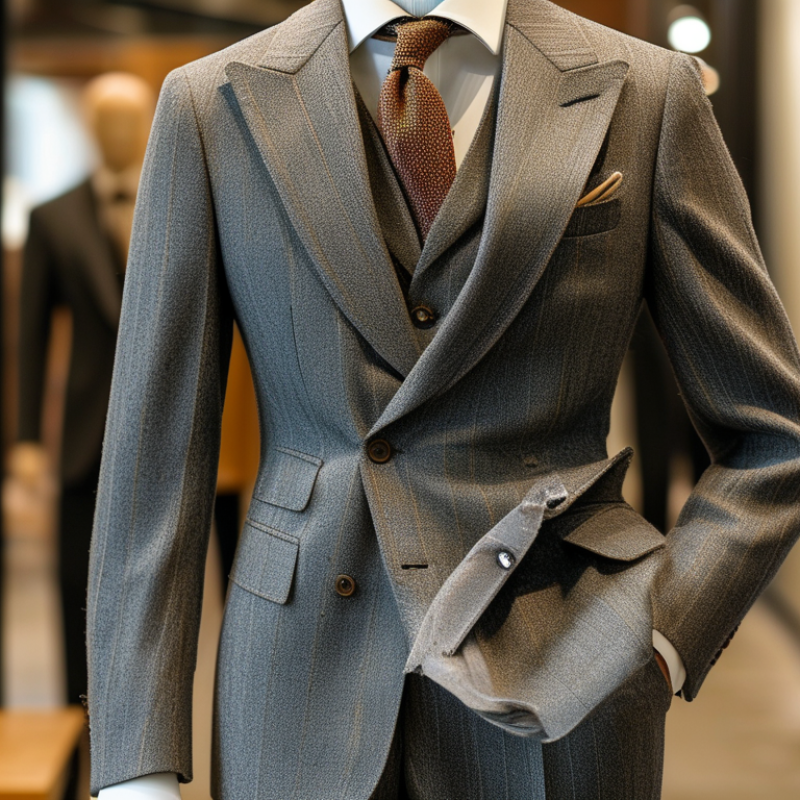
Suit fabric quality directly affects comfort, appearance, and tailoring performance for global buyers. A fabric may look smooth on a sample card, yet behave differently during cutting. Fiber composition, yarn strength, weight, and recovery all matter. Wool often offers natural breathability and crease recovery. Blended fibers can improve durability and cost control. However, the wrong blend may feel stiff or retain heat.

Tailors need fabric that cuts cleanly and presses evenly. Poor stability can cause twisting seams, shiny patches, or uneven hems. Colorfastness also matters when garments face sunlight, cleaning, and repeated wear.

Buyers should request test data, including fabric weight, shrinkage, pilling resistance, and shade consistency. Small details become expensive problems. In practical inspections, even reliable suppliers can show batch differences. That weakness deserves attention, not polite assumptions. A beautiful first sample is not complete evidence.

Tips:

Request production swatches, not only showroom samples. Test a small panel for pressing, stretching, and washing. Check the fabric under daylight and indoor lighting. Ask how rolls are inspected before shipment. Consider the buyer’s climate and wearing habits. A lightweight fabric may suit warm regions, but it might lose shape faster. A heavier cloth can support structured tailoring, yet feel uncomfortable in humid weather. The best choice balances hand feel, performance, maintenance, and production consistency.

Textile Exchange: Polyester Represented 57% of Global Fiber Output in 2023

Why Is Fashion Suit Fabric Important for Global Buyers?

Textile Exchange reported that polyester represented 57% of global fiber output in 2023. Global production reached about 124 million tonnes that year. This figure explains polyester’s strong presence in suit fabrics. It offers stable supply, wrinkle resistance, and efficient price control. Buyers also value its consistent performance during long-distance shipping and retail handling.

However, the percentage hides important details. Polyester can feel smooth, rough, heavy, or overly shiny. Its quality depends on yarn design, finishing, fabric weight, and blending. Recycled polyester may support better material planning, but the source and verification still matter. Textile Exchange’s Materials Market Report 2024 shows recycled fibers remain a smaller share than conventional polyester. That gap deserves honest attention. A lower-impact claim is not automatically a complete sustainability solution.

Tips: Request fiber percentages, fabric weight, test results, and traceability documents. Check abrasion resistance, pilling, colorfastness, and recovery after creasing. For formal suits, compare drape under natural light. Small swatches can mislead. Ask for production samples before placing large orders. Buyers should also review whether recycled content is physically verified. This step reduces uncertainty, although it cannot remove every supply-chain weakness. Suit fabric selection is therefore a commercial decision and a technical one. Performance, appearance, sourcing evidence, and end-use expectations must be judged together.

IWTO Data: Wool Supplied About 1% of Global Fiber Production in 2023

Why Is Fashion Suit Fabric Important for Global Buyers?

Wool supplied about 1% of global fiber production in 2023, according to International Wool Textile Organisation data. This small share matters for suit buyers. Global fiber output reached roughly 124 million tonnes in 2023, as reported by Textile Exchange’s Materials Market Report 2024. Wool therefore remains a limited material within a very large market. It is not automatically the best choice. Yet its natural resilience, moisture management, and crease recovery can support long wearing cycles in tailored clothing.

Fabric selection depends on more than fiber percentages. A buyer examining a wool suiting roll should check micron, staple length, yarn twist, weave density, and finishing quality. A tightly woven 260-gram cloth may feel structured under office lighting, while a lighter fabric can drape better in warmer regions. IWTO research also highlights wool’s renewable, biodegradable, and reusable characteristics, but environmental claims require careful system boundaries. Farm practices, transport, dyeing, and garment life all influence the result.

Traceability is still uneven. That is a weakness worth admitting. Certificates can support due diligence, but they do not replace supplier audits or physical fabric testing. Buyers should request test results for abrasion, colorfastness, dimensional stability, and pilling. Small differences become visible at scale: uneven lapels, shiny seat areas, or trousers losing shape after repeated wear. A material representing only about 1% of global fiber supply deserves precise sourcing, not vague luxury language.

Why Is Fashion Suit Fabric Important for Global Buyers? — IWTO Data: Wool Supplied About 1% of Global Fiber Production in 2023

Data Dimension 2023 / Reference Data Unit or Classification Why It Matters to Global Suit-Fabric Buyers Reference
Global fiber production Approximately 124 million tonnes All major fiber types Provides the overall market scale against which natural fibers and wool are evaluated. Textile Exchange, Materials Market Report 2024
Wool’s share of global fiber production About 1% Share by fiber volume Wool is a comparatively limited resource, making consistent sourcing, quality control, and responsible procurement important. International Wool Textile Organisation, 2023 market data
Polyester’s share of global fiber production Approximately 57% Share by fiber volume Highlights the strong availability of synthetic alternatives and the need for suit fabrics to compete on comfort, appearance, and durability. Textile Exchange, Materials Market Report 2024
Cotton’s share of global fiber production Approximately 22% Share by fiber volume Shows why wool suit fabric occupies a specialized position rather than a mass-volume position in the global fiber market. Textile Exchange, Materials Market Report 2024
Typical fine-apparel wool fineness Commonly below 19.5 microns for fine apparel applications Fiber diameter Finer fibers generally improve next-to-skin comfort and support premium lightweight suiting. Wool fiber classification commonly used in the wool-textile sector
Wool moisture regain Approximately 16–18% at standard atmospheric conditions Moisture regain by dry fiber mass Helps wool fabrics manage vapor and support comfort across changing temperatures and indoor environments. Standard wool-fiber technical data
Wool’s natural elasticity Naturally resilient and elastic fiber behavior Performance characteristic Supports crease recovery, shape retention, and a cleaner appearance in tailored garments. Technical characteristics of wool fiber
Wool biodegradability Biodegradable under suitable biological conditions End-of-life characteristic Can support circularity and end-of-life discussions, although blended fabrics, dyes, finishes, and local conditions affect actual biodegradation. Wool environmental and fiber-science references
Suit-fabric performance priorities Comfort, drape, crease recovery, durability, and color stability Buyer evaluation criteria A balanced specification reduces returns and helps buyers select fabric for formalwear, businesswear, and travel suiting. Common international apparel procurement criteria
Responsible sourcing considerations Traceability, animal-welfare practices, land management, processing, and chemical management Supply-chain assessment areas Because wool represents a small share of global fiber volume, transparent sourcing information can strengthen buyer confidence and support compliance requirements. International textile sustainability and wool-sector guidance

Note: Percentages are rounded. Fiber-production figures refer to global fiber volumes reported for 2023; technical performance can vary according to fiber fineness, yarn construction, fabric weight, finishing, and garment design.

How Fabric Weight, Fiber Fineness, and Durability Affect Suit Value

Why Is Fashion Suit Fabric Important for Global Buyers?

How Fabric Weight, Fiber Fineness, and Durability Affect Suit Value

Suit fabric value begins with measurable details, not appearance alone. A 240–280 g/m² cloth often suits temperate offices and travels well. Heavier 300–360 g/m² fabric offers stronger structure and warmth. However, weight alone can mislead buyers. A dense lightweight cloth may outperform a loose, heavy one.

Fiber fineness changes comfort and surface character. Fine wool below 19.5 microns, classified as superfine by the International Wool Textile Organisation, usually feels smoother against the skin. It can also demand gentler handling. Coarser fibers often resist abrasion better, though the result depends on yarn twist and weave. The Textile Exchange Materials Market Report 2024 recorded 124 million tonnes of global fiber production in 2023. This scale makes traceable fiber selection increasingly important for international sourcing. Small specification errors become expensive across large orders.

Tips: Request fabric weight in grams per square meter, fiber diameter, yarn count, and abrasion results. Ask for test conditions, not just attractive numbers. Martindale testing can compare surface wear, but it cannot predict every customer’s lifestyle. Check pilling, seam slippage, colorfastness, and recovery after creasing. A cloth that looks luxurious under showroom lighting may wrinkle badly during a twelve-hour journey. I have learned that “premium” is sometimes an assumption, not evidence. Durability should be judged through both laboratory reports and sample wear.

Why Is Suit Fabric Important for Global Buyers?

Typical woven wool suiting benchmarks: fabric weight, fiber fineness, and practical durability considerations.

Lightweight fabrics around 220–250 g/m² are comfortable for warm climates, while heavier fabrics around 280–320 g/m² generally provide better structure and seasonal durability. Finer wool fibers, commonly measured in microns, feel smoother and support a more luxurious finish, but they can be more sensitive to abrasion. For global buyers, the best value usually comes from balancing fiber fineness with suitable fabric weight, weave construction, and expected wear frequency.

Textile Exchange: Global Fiber Production Reached 124 Million Tonnes in 2023

Why Is Fashion Suit Fabric Important for Global Buyers?

Textile Exchange reported that global fiber production reached 124 million tonnes in 2023. That number changes how buyers view suit fabric. Every fiber choice affects resource use, performance, and supply-chain responsibility. A suit may look simple, but its fabric reflects farming, chemical processing, spinning, weaving, dyeing, and finishing. Small decisions multiply across large orders.

From a sourcing perspective, fabric quality needs more than a soft hand feel. Buyers should examine fiber content, fabric weight, drape, recovery, abrasion resistance, pilling, and colorfastness. Wool can offer warmth and natural resilience. Recycled synthetics may support material recovery goals, but their performance still requires testing. Cellulosic fibers can feel smooth, yet production methods differ significantly. Test reports and traceability documents provide stronger evidence than attractive claims.

The 124-million-tonne figure also reveals a difficult issue: production scale does not equal sustainability. A preferred fiber can still involve intensive dyeing, long transport, or unclear sourcing. I have found that sample approval alone is not enough. Lot consistency matters. So do shrinkage checks and seam performance. Buyers should request reliable certification records, chain-of-custody information, and independent laboratory results. Some decisions remain imperfect. Cost pressure, durability, and environmental goals do not always align. That tension deserves careful review before bulk production begins.