Top 10 Knitted Fabric Manufacturers in China

China is a major sourcing destination for Knitted Fabric, with manufacturers serving apparel, sportswear, lingerie, and home-textile markets. Yet a polished website alone cannot show how consistently a mill performs. This guide introduces ten Chinese manufacturers for buyers to compare, while emphasizing practical checks over impressive claims.

The comparison should consider fabric types, knitting equipment, order flexibility, and the services available in-house. Ask whether a supplier works with circular or warp knitting, and request details on fiber content, fabric weight, width, and finishing. A sample matters. Check its hand feel, stretch recovery, color consistency, and appearance after washing. A catalog can look excellent. A production sample may tell another story.

Buyers should also confirm minimum order quantities, sampling charges, lead times, and export experience before committing. Where relevant, request current certificates and verify their scope with the issuing organization; certification can apply to a product, facility, or process, not necessarily everything a company sells. These details help distinguish a capable partner from a suitable one for a specific project. No ranking can replace direct due diligence, and supplier capabilities may change over time. Treat this list as a starting point, then compare samples and written specifications against your own requirements. Some details may still be hard to assess remotely. That is worth remembering.
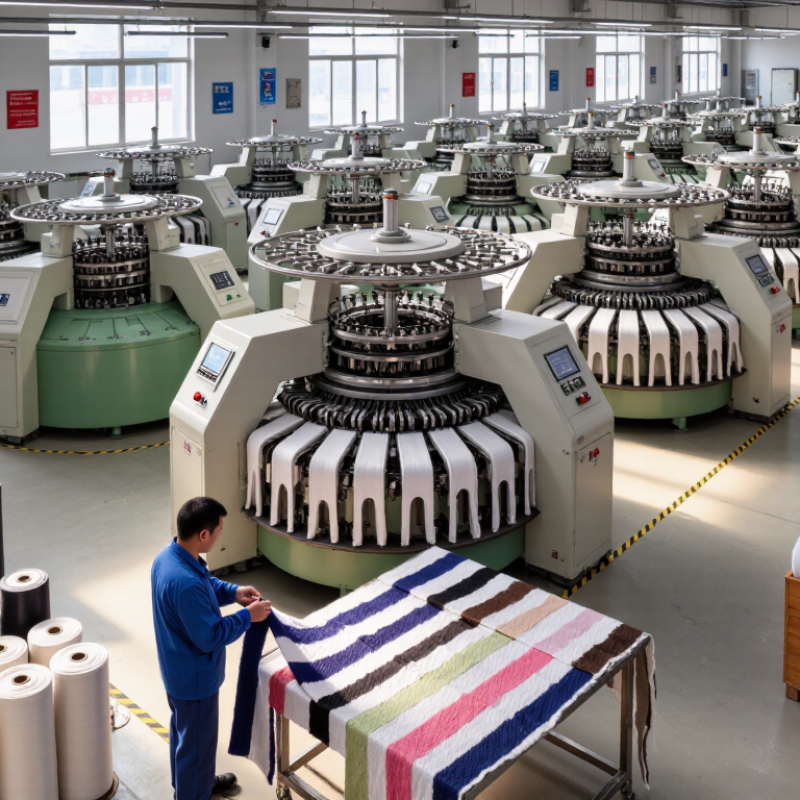
Top 10 Knitted Fabric Manufacturers in China

China’s Knitted Fabric Industry and Its Main Product Categories

China’s knitted fabric industry serves apparel, sportswear, underwear, and home-textile production. Its main categories include weft-knitted and warp-knitted fabrics. Weft knits, such as single jersey, rib, interlock, and fleece, are formed in rows of loops. They can feel soft and stretch comfortably. Warp knits, including tricot and mesh, are often more stable and resist runs. The categories can blur in practice. Fiber choice matters too: cotton feels breathable, polyester dries quickly, and elastane adds stretch.

A fabric’s name alone does not tell buyers how it will perform. Check its weight, width, composition, stretch recovery, and finish. A lightweight jersey may suit a T-shirt, while brushed fleece works better for a warm sweatshirt. Ask for a swatch and test it after washing; shrinkage, pilling, or color changes may not show on a specification sheet. Details matter.

Tips: Match the knit structure to the end use, then confirm the result with a sample. Share target measurements and care requirements with the supplier. If a specification is unclear, ask for clarification before production. I would not assume that two fabrics labeled “interlock” will behave identically; yarn, machine settings, and finishing can change the hand feel.
How to Evaluate Knitted Fabric Manufacturers

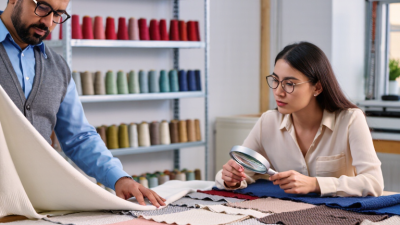
When evaluating knitted fabric manufacturers in China, look beyond product photos and price lists. Ask for a sample in the exact fiber blend, weight, and construction you plan to order. Check its stretch, recovery, surface feel, and dimensional change after washing. A soft hand is useful, but it does not prove consistent production. Request recent test results and clarify how each measurement was taken.

Tips: Compare the same specification across suppliers. Record fabric weight, usable width, shade, and agreed tolerances. Ask what happens when a production lot falls outside those limits.

A capable manufacturer should explain its knitting equipment, quality checks, minimum order quantity, and realistic lead time in clear terms. Ask how it tracks yarn lots and handles defects; vague answers deserve follow-up. If possible, inspect the facility or arrange a third-party production check. A perfect sample proves little on its own. Even careful checks cannot remove every risk, and I would not treat one successful order as proof of lasting consistency. Start with a manageable trial order, then compare bulk fabric with the approved sample before scaling up.

Top 10 Knitted Fabric Manufacturers in China

A useful comparison of the top 10 knitted fabric manufacturers in China should look beyond price and catalogue size. Compare knit structures, yarn options, machine gauges, monthly capacity, and minimum order quantities. The Textile Exchange Materials Market Report 2024 estimates that global fiber production reached 124 million tonnes in 2023, with polyester representing about 57 percent. This global figure does not measure Chinese factory output, but it shows why buyers should check fiber composition and recycled-content claims carefully. Small details matter.

For each manufacturer, request fabric samples and test dimensional stability, pilling, colorfastness, and stretch recovery. Ask whether the sample and bulk order use the same yarn source and finishing process. A polished sample is not a production guarantee. Review recent test reports, batch records, lead times, and quality-control procedures before comparing suppliers. Factory visits can reveal practical details, such as whether inspection happens during knitting or only after finishing. Still, any “top 10” ranking has limits: public data rarely compares every factory on equal terms, and the best fit depends on the fabric specification. A low price may look attractive, but inconsistent shade matching can cost more later.

Top 10 Knitted Fabric Manufacturers in China - Top 10 Knitted Fabric Manufacturers in China

A comparison of ten common knitted-fabric categories and their manufacturing characteristics. Rows describe fabric types, not ranked or named companies.

No. Knitted Fabric Type Common Construction Common Fiber Options Typical Applications Common Characteristics
1 Single jersey Weft knit; face and reverse sides look different Cotton, polyester, viscose, blends, or elastane blends T-shirts, tops, underwear, and casualwear Lightweight and flexible; plain edges may curl
2 Rib knit Alternating knit wales on the face and reverse; common forms include 1×1 and 2×2 rib Cotton, polyester, wool, or elastane blends Cuffs, neckbands, waistbands, and fitted garments Typically stretches and recovers more readily across the width than plain jersey
3 Interlock Double-knit structure with a smooth appearance on both sides Cotton, polyester, viscose, and blends Polos, dresses, babywear, and lightweight sportswear Usually more stable and thicker than comparable single jersey
4 Piqué Textured knit with a raised or cellular surface; construction varies by fabric Cotton, polyester, or cotton-polyester blends Polo shirts, casual tops, and uniforms Textured surface and an open structure in many versions
5 French terry Weft knit with looped yarn on the reverse side Cotton, polyester, or blended yarns Sweatshirts, joggers, and casualwear Looped back; generally less heavily brushed than fleece
6 Fleece knit Often a knitted fabric with a brushed or raised surface on one side or both sides Polyester, cotton, or cotton-polyester blends Sweatshirts, jackets, blankets, and cold-weather garments Soft, insulating surface; weight and warmth vary by construction and finishing
7 Mesh knit Open knit structure with visible spaces between yarns or loops Polyester, nylon, or blended synthetic yarns Sportswear panels, linings, bags, and technical garments Air-permeable; strength and openness depend on yarn and knit pattern
8 Tricot warp knit Warp-knit construction produced with yarns running lengthwise through the fabric Polyester, nylon, elastane, or blends Lingerie, linings, sportswear, and lightweight apparel Often smooth and dimensionally stable compared with many weft knits
9 Raschel warp knit Warp-knit construction that can create open, patterned, or net-like structures Polyester, nylon, and other suitable synthetic or blended yarns Netting, lace, technical textiles, and apparel fabrics Wide range of structures; properties depend on pattern, yarn, and finishing
10 Velour knit Knitted pile fabric with a cut or raised surface Polyester, cotton, or blended yarns Apparel, upholstery, costumes, and soft furnishings Soft, pile-textured face; appearance and durability depend on pile and finishing

Note: Fiber content, weight, width, stretch, and performance vary by specification and finishing; confirm the technical data sheet for each fabric.

Comparing Manufacturers by Products and Production Capabilities

Choosing among knitted fabric manufacturers in China starts with matching products to the intended garment. Some factories focus on jersey, rib, and interlock fabrics; others handle fleece, mesh, or performance knits. Compare fiber options, fabric weights, stretch, and finishing services. A broad catalog is useful, but it does not prove every item is made in-house.

Production capability matters just as much. Ask about knitting equipment, dyeing access, monthly capacity, and minimum order quantities. A supplier with circular knitting machines may suit basic T-shirts, while warp-knitting equipment supports different structures and applications. Check whether the factory can provide lab dips, sample yardage, and test reports before bulk production. Small details count. A clear lead time should include sampling, finishing, inspection, and packing.

Quality controls reveal how a manufacturer handles variation between rolls. Request inspection records and ask how fabric weight, width, shade, and shrinkage are checked. Where possible, examine several rolls, not only a polished sample. A neat swatch can hide uneven tension or color differences. Comparisons are imperfect: published capacity may not reflect current machine availability, and a factory’s strongest product may not match its full catalog. Record these gaps alongside price and delivery estimates when assessing each manufacturer.

Top 10 Knitted Fabric Manufacturers in China — Products and Production Capabilities

Typical fabric weight ranges across common knitted product categories

Bars show indicative commercial fabric-weight ranges in grams per square meter (GSM), not manufacturer-specific production data or a ranking. Actual weights vary with yarn, construction, finishing, and intended use.

Choosing a Supplier for Your Sourcing Requirements

Choosing a Chinese knitted-fabric supplier starts with the end use, not the lowest quote. For activewear, ask for fabric weight, stretch recovery, pilling, and colorfastness results. For T-shirts, inspect surface evenness, spirality after washing, and shrinkage across several rolls.

Textile Exchange’s 2024 Materials Market Report puts 2023 global fiber output at 124 million tonnes; polyester made up about 57%. That figure is global, not knit-specific, but it highlights why fiber content and recycled-content claims deserve checking.

Request a current specification sheet, test reports, available certifications, minimum order quantity, sample lead time, and bulk lead time. Compare test conditions; a wash result means little without the temperature and cycle count. Ask whether the supplier can keep fabric weight and shade within agreed tolerances between lots.

A polished swatch is only a first clue, not proof. Small details matter. Before a large order, test production yardage and record defects, delivery dates, and corrective actions. Checks can still miss problems, so written acceptance criteria help make risks visible before fabric reaches cutting.