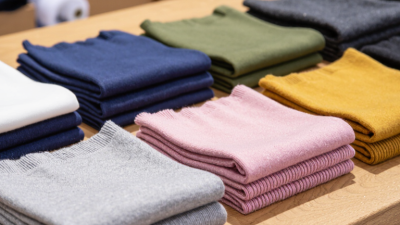
2026 Best Weft Knitted Fabric Suppliers for Buyers?
Choosing a Weft-Knitted Fabric supplier is not just a price comparison. Buyers must check loop consistency, fabric weight, stretch recovery, shade matching, and production capacity. A sample can feel smooth under showroom lights yet lose shape after repeated washing. Ask for test results, not assurances.
Textile Exchange’s Materials Market Report 2024 estimated global fiber production at 124 million tonnes in 2023 and projected growth to 160 million tonnes by 2030. This measures the wider fiber market, not weft-knitted fabric alone. Still, it signals rising pressure on material sourcing and supplier transparency. That distinction matters.
Knitting technologist David J. Spencer’s book Knitting Technology explains the structural role of intermeshing yarn loops in knitted fabrics. A useful takeaway for buyers is that loop structure influences stretch, drape, and dimensional stability. This is a technical principle, not a supplier guarantee. Verify it against the fabric you intend to buy.
For 2026, compare suppliers using the same specification sheet: fiber content, gauge, finished width, weight, color tolerance, and testing method. Request a production-lot sample where possible. Check whether the supplier can repeat the result at scale. Small differences matter.
There is no perfect supplier. A factory may offer excellent pricing but limited traceability; another may document its process yet miss delivery targets. This guide examines leading options and the questions buyers should ask before committing. It also flags where published information is incomplete, because a polished website is not proof of consistent production.

Define Weft-Knit Types and Uses: Jersey, Rib, Interlock, and Piqué
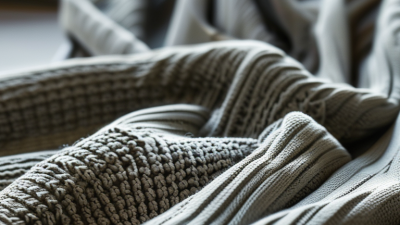
Weft knitting forms loops across the fabric width, but the resulting fabrics behave differently in use. Jersey is usually light and flexible, making it common in T-shirts and casual tops. Its edges may curl, and thin constructions can show through under bright light. Check finished weight, width, and shrinkage after washing—not just the sample swatch.
Rib fabric has raised vertical wales and typically stretches more across the width, so it suits cuffs, neckbands, and close-fitting garments. Interlock is a double-knit structure with a smooth face on both sides. It often feels more stable than single jersey, though it can use more yarn and weigh more. Small details matter. Ask suppliers for construction, fiber content, and recovery test results.
Piqué has a textured, often waffle-like surface that supports airflow and gives polo shirts a distinct look. Texture and weight vary, so request samples in the intended color and finish. Textile Exchange’s Materials Market Report 2024 estimated global fiber production at 124 million tonnes in 2023. That figure makes material traceability worth checking alongside price. Request documentation for fiber content and production location, then compare bulk-lot results with approved samples. A good swatch is not the whole story. I would still verify shrinkage and surface changes after repeated laundering; supplier data can be incomplete.
Compare Fabric Weight in g/m² and Width Using ASTM D3776
For 2026 fabric sourcing, compare weft-knitted samples by measured weight and usable width, not by product descriptions alone. ASTM D3776 provides methods for determining fabric mass per unit area, commonly reported in g/m². Ask suppliers to identify the method used and share results from representative production material. A small swatch may not reflect a full roll, especially when knitting tension or finishing changes between batches.
Width needs a separate check: ASTM D3776 does not measure fabric width. Record the finished, usable width and agree on how it is measured, such as following the applicable width-testing procedure or a written purchase specification. Note whether selvages, curled edges, or unusable margins are excluded. Compare samples under consistent conditioning and finishing; otherwise, differences may come from moisture or processing rather than the knit itself. Numbers help. They are not the whole story.
Tips: Request weight and width results for the same production lot. Check several points across the roll, and ask how much variation the supplier allows. Keep one physical sample for later comparison. A neat spreadsheet can still miss a practical issue: fabric that meets the target weight may feel too heavy or narrow for the intended garment.
Test Dimensional Change with ISO 5077 and Wash Fastness on the 1–5 Grey Scale
For weft knitted fabric, dimensional stability is not a minor detail. A sleeve that twists after washing can make an otherwise sound garment difficult to sell. Ask suppliers to test representative fabric using ISO 5077, which measures dimensional change after washing and drying. Record the original and final length and width, then compare shrinkage or growth against your product limits. Keep the laundering and drying procedure consistent. Small marks matter.
Wash fastness needs a separate check. Use an agreed washing method, then assess color change and staining with the appropriate grey scales. Ratings run from 1 to 5: a higher score indicates better fastness. Do not treat the two ratings as interchangeable; color released onto an adjacent fabric may matter even when the main fabric looks acceptable. Request the test conditions, rating results, and fabric lot identification, not just a pass/fail note.
A single swatch cannot represent every production roll. Ask for samples from more than one lot when order consistency is important, and retain a reference piece for comparison. Results can shift with fabric construction, dyeing, finishing, and drying conditions. A neat report may still miss a real variation. That deserves a second look. Share your intended care instructions with the supplier before testing, so the laboratory method reflects how the finished garment is expected to be washed.
2026 Best Weft Knitted Fabric Suppliers for Buyers? - Test Dimensional Change with ISO 5077 and Wash Fastness on the 1–5 Grey Scale
Buyer specification benchmarks for comparing supplier samples. The values below are suggested purchasing targets, not test results or claims about any supplier. Confirm the specified washing and drying procedure before testing.
| Fabric category |
Typical weft-knit construction |
Indicative mass (g/m²) |
Suggested dimensional-change target after washing |
Suggested color-change rating |
Suggested staining rating |
Buyer checks |
| Cotton single jersey |
Plain single knit |
140–200 |
Length and width: within ±5% |
At least 4 |
At least 3–4 |
Check spirality, shrinkage, skew, and shade consistency. |
| Cotton interlock |
Double-knit interlock |
180–260 |
Length and width: within ±5% |
At least 4 |
At least 3–4 |
Assess surface appearance, dimensional recovery, and pilling requirements. |
| Cotton-elastane jersey |
Single jersey with elastane |
170–240 |
Length and width: within ±5% |
At least 4 |
At least 3–4 |
Record elastane content and check growth, recovery, and heat sensitivity. |
| Polyester pique |
Pique knit |
160–230 |
Length and width: within ±3% |
At least 4 |
At least 4 |
Check wicking claims separately; assess snagging and surface texture. |
| Viscose blend jersey |
Single jersey, often with a synthetic-fiber blend |
150–220 |
Length and width: within ±5% |
At least 4 |
At least 3–4 |
Check wet strength, relaxation shrinkage, and care-label suitability. |
Test-method note: ISO 5077 specifies determination of dimensional change in washing and drying. The washing and drying procedure should be stated, commonly with reference to ISO 6330. Assess color change using the ISO 105-A02 grey scale and staining using the ISO 105-A03 grey scale; ratings run from 1 (poor) to 5 (best). Agree on sample conditioning, number of wash cycles, tolerances, and acceptance criteria with the buyer and testing laboratory.
Evaluate Supplier Capacity, MOQ, Lead Time, Certifications, and Traceability
2026 Best Weft Knitted Fabric Suppliers for Buyers?
A supplier’s stated capacity is only useful when it matches your yarn, gauge, and finishing requirements. Textile Exchange’s Materials Market Report 2024 estimated global fiber production at 124 million tonnes in 2023, with growth projected to 160 million tonnes by 2030. That scale makes clear capacity checks essential, but it does not guarantee machine time for your order. Ask for monthly available output, current utilization, and recent shipment records. Small lots matter. Compare the minimum order quantity for greige fabric with the MOQ after dyeing; these can differ sharply. Request a small trial lot, then check width, weight, stretch recovery, and shade consistency against your approved sample.
Lead time should include knitting, dyeing, inspection, and transport—not just machine days. Ask for separate estimates and a delay buffer. The World Bank’s 2023 Logistics Performance Index evaluates customs, infrastructure, shipment arrangements, logistics competence, tracking, and timeliness; use those dimensions when assessing the supplier’s shipping route. Confirm certificates directly with the issuing organization, check their scope and expiry, and match them to the specific facility and material. Paper is not proof. For traceability, request lot-level records linking yarn input, knitting batch, dye lot, and dispatch documents. One weak point in many buying checks is accepting a certificate without connecting it to the actual production site. That takes extra time, but it can expose gaps before bulk orders begin.
Rank 2026 Suppliers by Sample Results, Compliance, and Total Landed Cost
Rank weft knitted fabric suppliers by evidence, not polished sales sheets. Request identical sample specifications from each supplier, including fiber content, weight, width, and finish. Then wash and stretch the swatches using conditions close to your production process. Samples matter. Record shrinkage, surface pilling, recovery, and shade variation under daylight. A neat hand feel is not enough if the fabric twists after washing.
Compliance should be checked against your product and destination requirements. Ask for current test reports, fiber declarations, and traceable batch information. Confirm that the documents cover the exact fabric construction being quoted. Similar-looking materials may perform differently. Missing or outdated paperwork deserves a lower score, even when the sample looks excellent. Keep the checks specific; a broad certificate may not answer a narrow question.
Compare total landed cost, not just the unit price. Include minimum order quantities, sample and setup fees, freight, insurance, duties, and likely inspection costs. Request written estimates and confirm the delivery term and shipment assumptions. A low quote can be expensive. A simple weighted score can combine sample performance, compliance readiness, and landed cost, but the weights need reflection. For a close-fitting garment, recovery may matter more than a small price gap. For basic interiors, predictable width and shade consistency may carry more weight. Recheck the ranking when order size or shipping routes change.
2026 Best Weft Knitted Fabric Suppliers for Buyers
Illustrative supplier screening scorecard: sample results, compliance, and landed-cost competitiveness.
Scores are illustrative, not verified supplier data. Sample results represent accepted swatches out of 12; compliance represents completed items from an 8-document checklist; landed-cost competitiveness is a normalized score, where 100 indicates the lowest modeled delivered cost. Verify test results, documentation, freight, duties, and other charges before selecting a supplier.